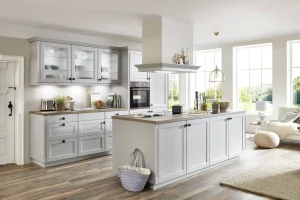

Handleless Kitchen Cabinet Turkey
Handleless Kitchen Cabinet Turkey: The Ultimate Technical and Architectural Guide to Modern Streamlined Culinary Design
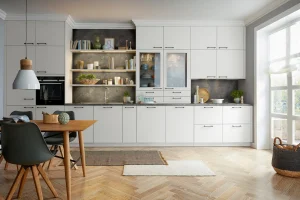
The modern kitchen has underwent a profound transformation, evolving from an isolated, utilitarian workspace into the open-plan architectural anchor of the contemporary home. As residential design across global metropolitan hubs embraces minimalism, the visual and physical clutter of traditional furniture hardware has increasingly been replaced by clean, unbroken lines. At the absolute forefront of this design movement is the Handleless Kitchen Cabinet Turkey sector, an industrial and design powerhouse that has redefined the standards of streamlined culinary aesthetics.
For homeowners, interior architects, and property developers sourcing premium kitchen furniture, choosing a handleless kitchen is not merely a stylistic decision. It is a complex engineering commitment. The absence of traditional handles requires specialized cabinet carcase geometry, advanced automated manufacturing tolerances, high-performance internal motion systems, and specific material sciences to ensure long-term durability and ergonomic efficiency.
This comprehensive, highly technical guide explores every dimension of the Handleless Kitchen Cabinet Turkey industry. From the physics of structural aluminum profiles to the chemistry of fingerprint-resistant surface coatings, from regional industrial manufacturing hubs to millimeter-precise installation protocols, this article serves as the definitive authoritative resource for understanding, designing, and procuring world-class seamless cabinetry.
1. The Architectural Philosophy and Evolution of Handleless Design
The rise of the Handleless Kitchen Cabinet Turkey phenomenon is deeply intertwined with the evolution of modern European and Mediterranean residential architecture. Over the past two decades, high-density urban living in major Turkish hubs like Istanbul, Ankara, and Izmir has led to a significant shift toward open-plan configurations. In these open layouts, the kitchen is completely visible from the main living and dining zones, demanding a furniture style that blends seamlessly with the overall interior architecture of the home.
Traditional cabinet handles, knobs, and pulls create visual interruptions and physical barriers. In a compact or high-traffic kitchen, protruding hardware can snag clothing, restrict pedestrian clearance lanes, and introduce chaotic lines that make small spaces feel cluttered. Handleless cabinetry eliminates these disruptions, creating continuous, monolithic planes that enhance the spatial perception of the room.
However, true handleless design is far more than a aesthetic choice; it is a structural methodology. Historically, early handleless designs relied on primitive push-catches that frequently failed under heavy daily usage. The modern Handleless Kitchen Cabinet Turkey industry has completely evolved beyond these early limitations. By fusing advanced German and Italian industrial tooling with Turkey’s robust, vertically integrated furniture manufacturing sector, local producers create handleless systems that balance high mechanical utility with unmatched structural longevity. The result is a kitchen that functions as an ergonomic workspace while presenting the clean visual profile of high-end architectural furniture.
2. Core Structural Typologies of Handleless Systems
When specifying a Handleless Kitchen Cabinet Turkey system, designers must choose between several distinct mechanical and structural methodologies. Each typology alters the construction of the underlying cabinet chassis, impacts manufacturing costs, and provides a unique tactile user experience.
+-------------------------------------------------------------------------------+

|                  STRUCTURAL TYPOLOGY PERFORMANCE MATRIX                       |
+----------------------+--------------------+-------------------+---------------+

| Typology Class       | Carcase Alteration | Hardware Expense  | Visual Profile|
+----------------------+--------------------+-------------------+---------------+

| True J-Pull Profile  | None (Door Integrated) Low             | Clean Floating|
| True Gola Profile    | Extreme (Milled Carcase) High           | Linear Architectural|
| Mechanical Tip-On    | None               | Medium            | Flush Monolithic|
| Electronic Servo-Drive| None              | Extreme           | Ultra-Luxury Push|
+----------------------+--------------------+-------------------+---------------+
True Gola Profile Systems (The Architectural Standard)
The Gola profile system represents the pinnacle of modern, high-end handleless design. In a true Gola kitchen, the handleless mechanism is integrated into the cabinet carcase rather than the door panel itself.
- The Structural Mechanism: The top and side panels of the cabinet boxes are manufactured with deep, continuous horizontal or vertical cutouts. Specialized, extruded aluminum structural rails—known globally as Gola profiles—are recessed and bolted directly into these milled carcase channels.
- The Ergonomics: The cabinet door or drawer front extends slightly past the aluminum rail. This creates a continuous, hollow recessed channel running beneath the countertop or between drawer stacks. The user simply slides their fingers behind the top edge of the door panel and pulls it open, never making direct contact with a traditional handle.
- Variations: Gola systems are available in horizontal configurations for base cabinets (utilizing C-shape profiles between double drawers and L-shape profiles directly beneath the countertop) and vertical configurations for tall tower panels or integrated refrigerator enclosures.
Integrated J-Pull Profile Doors
The J-Pull methodology integrates the handle channel directly into the facade material of the door panel itself.
- The Structural Mechanism: The cabinet carcase remains entirely standard, with no specialized milling or structural modifications required. Instead, the top or bottom margin of the thick MDF door panel is precision-routed on a high-speed CNC machine to cut out a deep, hooked profile that resembles the letter “J”.
- The Surface Challenge: After routing, the J-profile edge must be seamlessly wrapped or painted. This configuration is most commonly paired with premium polyurethane lacquering or advanced thermoformed membrane foils, ensuring a continuous, waterproof barrier across the entire contoured pull surface.
Mechanical Tip-On / Push-to-Open Systems
For configurations seeking an absolute flush, monolithic wall effect with zero visible recesses, gaps, or shadow lines, mechanical push-to-open hardware is utilized.
- The Structural Mechanism: The cabinet fronts sit completely flat against the carcase frame. Behind each door or drawer front sits a spring-loaded, heavy-duty mechanical piston plunger.
- The Interaction: When a user gently presses any part of the exterior door face with their hand, elbow, or knee, the internal mechanical catch triggers, physically popping the door forward by several centimeters. The user then grabs the edge of the panel to open it fully. Closing the door re-engages the internal spring mechanism.
Electronic Servo-Assisted Motion Systems
Representing the absolute luxury segment of the Handleless Kitchen Cabinet Turkey market, electronic systems replace mechanical springs with automated smart motors.
- The Structural Mechanism: High-capacity electric drive units are mounted at the rear of the cabinet chassis, connected to a localized low-voltage electrical circuit.
- The Interaction: A feather-light tap anywhere on the handleless door or drawer front sends an electronic signal to the motor, which glides the drawer or door open silently and effortlessly. This setup is highly favored for deep, heavy waste-bin drawers or wide pot drawers loaded with cast-iron cookware, where mechanical push systems can struggle under intense static loads.
3. Structural Material Sciences and Substrate Integrity
The long-term reliability of a Handleless Kitchen Cabinet Turkey installation is directly dependent on the density and dimensional stability of the core substrate materials. Because a user exerts constant physical pull or push forces directly onto the edges or faces of the door panels, handleless systems require significantly higher structural tolerances than traditional cabinetry.
Moisture-Resistant High-Density MDF (Medium-Density Fiberboard)
MDF serves as the foundational core for the vast majority of premium handleless door configurations, especially for integrated J-Pull layouts.
- The Density Benchmark: Premium Turkish manufacturers utilize high-density engineered wood fiber sheets (typically exceeding 750-800 kg/m³). This extreme density guarantees that the crisp, routed edges of a J-Pull profile will not crumble, fracture, or weaken over years of localized finger pressure.
- Moisture Resistance: For kitchens exposed to high ambient humidity or cooking steam, green-core moisture-resistant MDF (complying with European standard EN 312) is mandatory for sink base cabinets and areas adjacent to dishwashers to prevent structural swelling.
Melamine-Faced Chipboard (MFC / Suntalam)
For the internal structural boxes (the carcase) of a Gola profile kitchen, Melamine-Faced Chipboard, locally designated as Suntalam, is the industry standard.
- The Engineering: Modern Turkish Suntalam features a highly compressed three-layer wood chip core coated on both sides with resin-impregnated decorative papers.
- The Rigidity Requirement: Because a Gola kitchen requires deep, continuous structural channels to be cut out of the top and sides of the cabinet boxes, the remaining carcase corners must possess exceptional rigidity and screw-holding capacity to ensure the structural box does not twist or sag over time.
Extruded Structural Aluminum Profiles
The metal tracks used in true Gola Handleless Kitchen Cabinet Turkey systems represent a major segment of metallurgical manufacturing.
- Alloy Composition: Profiles are extruded from structural-grade architectural aluminum alloys (typically 6063-T5), which provide exceptional structural rigidity, high corrosion resistance, and crisp dimensional accuracy.
- Anodization and Surface Treatments: To prevent oxidation and withstand the constant friction of fingernails, the aluminum tracks undergo advanced anodization or electrostatic powder coating processes. Popular finishes include matte silver anodized, deep satin black, champagne gold, and brushed titanium, allowing the handleless track to serve as a contrasting architectural feature or blend invisibly with the surrounding cabinetry colors.
4. High-Performance Surface Finishes and Touch Chemistry
Because handleless kitchens require users to make direct physical contact with the cabinet doors to open and close them, the choice of surface finish becomes a critical functional factor. Traditional kitchens utilize a handle to absorb finger oils, moisture, and grime; handleless kitchens transfer this physical contact directly to the door facade. The Handleless Kitchen Cabinet Turkey sector utilizes advanced chemistry to solve this challenge.
+-------------------------------------------------------------------------------+

|                       SURFACE CLEANABILITY AND OIL RATING                     |
+----------------------+--------------------+-------------------+---------------+

| Surface Finish Class | Fingerprint Markings| Hydrophobic Rating| Repair Method |
+----------------------+--------------------+-------------------+---------------+

| Excimer Super-Matte  | Near Zero (Immune) | Extreme           | Thermal Healing|
| High-Gloss Acrylic   | High (Visible)     | High              | Micro-Buffing |
| Polyurethane Lacquer | Medium-Low         | Medium-High       | Local Re-spray|
| Textured HPL Laminate| Low                | High              | Standard Wipe |
+----------------------+--------------------+-------------------+---------------+
Excimer Laser Super-Matte Finishes (The Anti-Fingerprint Revolution)
The absolute pinnacle of contemporary handleless door design is the adoption of ultra-matte surfaces treated with Excimer laser technology.
- The Nano-Chemistry: The surface coating is cured using high-energy, short-wavelength UV Excimer lasers in an oxygen-free nitrogen atmosphere. This process causes the top molecular layer of the coating to form a micro-textured, microscopic wrinkled structure.
- The Functional Result: This microscopic texture diffuses light completely, resulting in a true gloss level of less than 1 (zero reflection). More importantly, the micro-nanostructure minimizes the surface contact area available to human skin oils. Fingerprints become physically invisible, and the surface displays an incredibly smooth, soft-touch tactile experience that remains clean even in high-traffic family kitchens.
- Thermal Self-Healing: Many premium Excimer and nanotech laminates feature thermal self-healing properties, allowing micro-scratches to be repaired simply by applying localized heat via a damp cloth and an iron.
High-Gloss and Velvet-Matte Solid Acrylic Coated Panels
Acrylic panels represent a robust, highly stable contemporary finish.
- The Engineering: A solid sheet of PMMA plastic is fused onto an MDF board using permanent Polyurethane (PUR) hot-melt adhesives.
- Properties: High-gloss acrylic delivers a mirror-like reflective surface index that can make tight handleless kitchens appear significantly larger by bouncing light deep into the room. For handleless designs, acrylic is treated with a specialized hard-coat scratch-resistant top layer to withstand the constant friction of fingernails without showing micro-abrasions over time.
Multi-Layer Polyurethane Lacquer (Lake Kapak)
Lacquered finishes represent the fusion of classic artisan craft with modern liquid polymer engineering.
- The Engineering: Profiled J-pull doors or flat Gola doors are treated with multiple sequential layers of liquid polyurethane or acrylic-based paints within computerized, dust-free spray booths. Each layer is meticulously sanded before the next coat is applied.
- The Structural Advantage: Because liquid paint covers the front face, routed grooves, and all lateral edges simultaneously, a lacquered door is completely seamless. There are absolutely no joint lines, edges, or seams where water vapor, cooking oils, or ambient moisture can breach the wood core. This makes it exceptionally durable against steam from boiling stovetops or open dishwashers.
5. Hardware, Kinematics, and Drawer Internal Organization
A handleless kitchen can only function successfully if its internal motion hardware is engineered to compensate for the absence of external pulls. The mechanical hardware must provide smooth deceleration, responsive opening acceleration, and flawless structural alignment.
Synchronized Full-Extension Drawer Slide Systems
In contemporary Handleless Kitchen Cabinet Turkey configurations, traditional base cabinets with swinging doors are largely replaced by wide, deep drawer stacks.
- The Slide Engineering: Runners incorporate synchronized ball-bearing tracks where the front, middle, and rear slide elements move in perfect harmony. This prevents the drawer from racking or twisting, even if a user pushes or pulls the extreme left or right corner of a wide 120cm drawer front.
- Weight Capacities and Dynamic Damping: Premium hardware systems (featuring top-tier domestic brands like Samet alongside international brands like Blum and Hettich) offer structural weight ratings ranging from 40kg to 70kg. Liquid-filled hydraulic dampers ensure that when a heavy drawer is pushed shut, it slows down smoothly, closing silently with zero impact stress on the cabinet carcase.
Specialized Wide-Angle and Zero-Protrusion Hinges
For tall vertical handleless pantries or base units utilizing internal pull-out concealed drawers, standard cabinetry hinges are insufficient.
- Zero-Protrusion Kinematics: When a handleless door is opened to a standard 90-degree angle, a traditional hinge allows the door panel to hang slightly inside the carcase opening clearance zone. For internal drawers, this causes the drawer box to strike and gouge the inside of the door. Wide-angle (typically 155-degree or 170-degree) zero-protrusion hinges swing the door entirely clear of the carcase opening footprint, allowing internal storage racks to glide outward cleanly.
- Integrated Push-to-Open Hinges: Standard soft-close hinges incorporate internal tension springs designed to pull the door shut. For Tip-On or mechanical push systems, specialized hinges with inverse spring actions are required to push the door outward when the internal latch is released.
6. Sourcing From the Turkish Manufacturing Industry: Hubs and Ecosystems
Turkey has rapidly consolidated its position as one of the world’s most dominant industrial manufacturing hubs for modular and bespoke kitchen cabinetry, exporting high-volume collections to Europe, the Middle East, North Africa, and Central Asia. The Handleless Kitchen Cabinet Turkey ecosystem benefits from immense raw material availability, advanced industrial automation, and competitive logistical advantages.
Primary Industrial Production Clusters
- Bursa (İnegöl Region): Globally recognized as the industrial heart of Turkish furniture fabrication. İnegöl houses massive, highly automated factories that leverage Industry 4.0 production paradigms. These facilities utilize fully integrated computerized CNC cell lines capable of executing high-speed, millimeter-precise carcase milling for Gola profiles at massive volume scales.
- Kayseri Industrial Sector: Kayseri stands as a powerhouse for standardized, modular mass-scale cabinetry production. The mega-factories in this region focus intensely on automated high-efficiency flat-pack systems, supplying large-scale international commercial housing developments with reliable, high-performance handleless cabinetry lines.
- Istanbul and Kocaeli Cluster: This metropolitan zone specializes in premium, high-end, custom-engineered architectural kitchen design. Sourcing from this region connects developers with elite boutique fabrication plants that work alongside leading architectural firms, utilizing cutting-edge nano-materials, custom lacquers, and advanced integrated smart home electronics.
Quality and Compliance Standards
Sourcing Handleless Kitchen Cabinet Turkey systems guarantees compliance with rigorous international safety, environmental, and performance benchmarks:
- EN 14749: The European safety standard that strictly dictates the load-bearing capacities, structural stability, and structural anti-tipping parameters of all domestic and commercial storage cabinetry furniture.
- E1 and E0 Formaldehyde Emissions: Reputable Turkish manufacturers exclusively utilize wood substrate panels that comply with European E1 or the ultra-strict E0 healthcare standards. This ensures that the resin adhesives used in the MDF and chipboard sheets do not off-gas toxic formaldehyde particles into the indoor residential air environment.
- TSE (Turkish Standards Institution) Compliance: Confirms that all internal motion hardware, safety glass shelving, and integrated lighting modules meet rigorous mechanical wear and load testing protocols.
7. Comprehensive Technical Step-by-Step Installation Protocols
The ultimate aesthetic success and physical functionality of a Handleless Kitchen Cabinet Turkey system depend entirely on the skill and precision of the on-site installation process. Because handleless kitchens rely on crisp shadow lines and uniform spacing to create a clean minimalist appearance, even a minor 1.5mm misalignment will be glaringly obvious to the eye. Professional installation must follow a strict, technically disciplined sequence:
Step 1: 3D Laser Mapping and Structural Diagnostics
Before unpacking any cabinet modules, the installation technicians deploy self-leveling 3D cross-line lasers to map the exact dimensions of the room.
- Plumb and Level Checks: The installer verifies the true vertical plumb of the back walls and maps the high and low points of the subfloor across the entire kitchen footprint. If a wall bows or leans, the installer prepares custom shim blocks to ensure the cabinet boxes remain perfectly true.
- Corner Squareness Verification: The 90-degree intersection of wall junctions is measured. This check is incredibly critical for true Gola kitchens, as an out-of-square corner will cause continuous aluminum profile rails to bind or require uneven cutting.
Step 2: Precision Carcase Interlocking and Wall Anchoring
- Setting Base Heights: Base cabinets are placed into position on heavy-duty, adjustable ABS polymer leveling legs. Working from the highest floor point, the legs are threaded upward or downward until the horizontal tops of all boxes sit perfectly aligned with the laser datum line.
- Structural Binding: Adjacent cabinet boxes are clamped tightly together and structurally unified using nickel-plated steel sleeve binding screws passed through the interior sidewalls. This links individual boxes into a single, highly rigid structural frame.
- Masonry Wall Fixing: The entire interlocked cabinet matrix is permanently anchored to the back masonry or concrete walls using high-capacity expansion wall anchors or chemical bolts to eliminate any risk of structural shifting under heavy loads.
Step 3: Extruded Aluminum Gola Profile Integration
For kitchens incorporating true Gola systems, installing the aluminum profile rail is a highly critical step:
+-------------------------------------------------------------------------------+

|                   GOLA PROFILE RECESSED RAIL INSTALLATION                     |
+-------------------------------------------------------------------------------+

|                                                                               |
|   [MDF Countertop Base] ===================================================   |
|                                                                               |
|   +-----------------------+   +-------------------------------------------+   |
|   | Continuous Aluminum   |   | [Milled Carcase Cutout Channel]           |   |
|   | L-Shape Gola Profile  |==>| Recessed and mechanically face-screwed    |   |
|   | Structural Track      |   | from the interior box chassis wall        |   |
|   +-----------------------+   +-------------------------------------------+   |
|                                                                               |
|   [Drawer Front Panel] ======= Slider Clearance Gap Gap Space                 |
|                                                                               |
+-------------------------------------------------------------------------------+
- Miter Cutting Corner Tracks: Where horizontal or vertical Gola profiles meet at a corner junction, the aluminum tracks must be cut on a precision metal miter saw at an exact 45-degree angle to ensure a seamless, smooth metal-to-metal connection with zero sharp edges.
- Fixing the Rails: The aluminum profile is slid into the pre-milled carcase channels. It is mechanically secured from the inside of the cabinet box using specialized stainless-steel face screws driven through pre-drilled holes in the profile flange.
- Installing End Caps: Exposed outer ends of the aluminum rails are fitted with solid anodized aluminum matching end caps to hide the raw metal cut line and complete the polished visual profile.
Step 4: Countertop Installation and Under-Counter Clearances
- Verifying Clearances: The pre-fabricated stone slab (quartz, porcelain, or natural granite) is dry-fitted over the base cabinet structural matrix. The installation team ensures the slab sits flat on the cabinet walls without flexing or putting downward physical pressure on the horizontal Gola aluminum rails.
- Bonding and Seaming: High-elasticity polyurethane or structural silicone adhesives are applied along the top edges of the carcase frame. The slab is lowered into place, and multi-piece seams are pulled together using mechanical suction-cup seam tighteners.
- Plumbing and Sink Rigging: Undermount sinks are permanently bonded beneath the stone cutout openings using structural epoxy and reinforced with heavy-duty mechanical support brackets anchored inside the sink base cabinet walls.
Step 5: Kinematic Fine-Tuning and Facade Line Calibration
The final, most time-consuming phase of a Handleless Kitchen Cabinet Turkey installation involves micro-adjusting the door and drawer fronts to achieve flawless visual symmetry across the entire cabinetry layout.
- The 3D Micro-Adjustment Process: Using the integrated manual adjustment screws present on premium soft-close hinges and drawer runners, the technician adjusts the alignment across three spatial axes:
- The Horizontal X-Axis: Shifts the door front left or right to create a perfectly uniform, parallel vertical gap (typically exactly 3mm) between all adjoining panels.
- The Vertical Y-Axis: Adjusts the door height upward or downward to ensure that all horizontal profile lines run completely parallel to the countertop edge across the entire room.
- The Depth Z-Axis: Micro-positions the front panel closer to or further away from the cabinet carcase frame. This step is critical to ensure that push-to-open pistons engage responsively and doors sit flat against perimeter dust-strips with uniform sealing pressure.
8. Budgeting Structures, Pricing Tiers, and Cost Efficiency
Investing in a Handleless Kitchen Cabinet Turkey configuration requires a clear, technically informed understanding of how costs are calculated and structured across different market segments. Kitchen cabinetry pricing in Turkey is traditionally calculated on a linear meter basis (metretül), which encompasses both the base cabinetry box and the matching upper wall-hung module directly above it.
The financial scale of a handleless kitchen is dictated by three distinct tiers:
Entry-Level Tier (Suntalam Carcase & J-Pull Membrane Doors)
- Core Configurations: Standard Suntalam (Melamine-Faced Chipboard) structural carcases paired with flat or J-profile thermoformed membrane (PVC) door panels. Internal motion hardware relies on standard domestic soft-close drawer slides without advanced electrical servo assists. Countertops are typically selected as high-pressure laminate or entry-level local granites.
- Value Profile: Highly cost-effective and functionally durable, making it an excellent option for rental properties or budget-conscious urban apartment developments.
Mid-to-High Tier (True Gola Aluminum Rails & Acrylic or Lacquer Doors)
- Core Configurations: Moisture-resistant green-core MDF carcase frames featuring true extruded aluminum Gola profile tracking networks. Door panels are finished in high-gloss scratch-resistant acrylic or multi-coated polyurethane matte lacquers. The internal drawers feature ultra-slim steel double-wall slides with integrated hydraulic soft-close damping. Countertops are upgraded to premium Turkish engineered quartz brands like Belenco or Çimstone.
- Value Profile: The ideal sweet spot for private residential renovations, providing premium modern aesthetics, exceptional wear resistance, and significant long-term real estate value appreciation.
Ultra-Luxury Bespoke Tier (Excimer Nano-Matte, Servo Motors & Sintered Stone)
- Core Configurations: Premium marine-grade plywood or thick high-density MDF carcases completely encased in cutting-edge Excimer laser anti-fingerprint super-matte coatings or custom book-matched natural wood veneers. All primary base drawer stacks incorporate electronic touch-assisted opening motors. Countertops feature ultra-compact sintered stones or imported Italian porcelain slabs with seamless mitered waterfall edge profiles cascading down to the finished floor tile line.
- Value Profile: A completely personalized architectural statement built with zero material or technical compromises, tailored for luxury penthouse developments and high-end custom villas.
Key Hidden Factors Affecting Cost Estimates
- Carcase Customization Labor: True Gola kitchens require intensive factory machining to precision-mill the continuous recessed channels across all cabinet box frames. This increased manufacturing step raises basic carcase costs compared to standard flat-box cabinet construction.
- Appliance Integration Engineering: Handleless configurations require specialized, high-load integrated panel doors to mask built-in refrigerators and dishwashers. Coupling these heavy appliance doors to the cabinetry structure requires specialized sliding guide systems or heavy-duty structural fixed-door hinges, which increases hardware budgets.
- Internal Organization Systems: Transitioning to wide, deep drawer modules inherently increases hardware costs compared to simple swinging doors with basic internal shelving. Adding internal steel organizers, spice racks, and integrated lighting profiles further increases the final estimate.
9. Long-Term Maintenance and Structural Preservation Protocols
To ensure that a premium Handleless Kitchen Cabinet Turkey installation retains its pristine aesthetic appeal and optimal mechanical performance for decades, homeowners must adhere to a strict care and preservation protocol tailored to the material science of engineered wood and advanced modern surface coatings.
Protecting Against Thermal and Structural Steam Stress
The intense steam produced by boiling kettles, rice cookers, and high-temperature coffee machines can create localized zones of extreme humidity. Over years of exposure, this hot vapor can penetrate edge seams, leading to substrate wood swelling or surface peeling.
- The Solution: Always operate the high-power range hood extractor during any cooking process to lower indoor ambient humidity. Avoid placing small countertop steam-producing appliances directly underneath the upper wall cabinet modules. Instead, pull them forward past the countertop edge line or operate them on an open kitchen island structure.
Safeguarding the Integrity of Dishwasher Boundaries
When a dishwasher completes its intense cleaning cycle, the internal temperature is highly elevated. Opening the dishwasher door immediately releases a sudden, concentrated cloud of hot moisture that expands directly against the flanking wood cabinet panels and the underside of the countertop.
- The Solution: Do not pop the dishwasher door cracked open immediately after the cycle terminates. Allow the appliance to sit closed for at least 15-20 minutes so that the internal steam can condense cleanly back into the drainage system. Many premium Turkish installations include a specialized clear aluminum or plastic steam deflector shield screwed to the underside of the countertop directly above the dishwasher to redirect any stray vapor away from the surrounding woodwork.
Recommended Surface Cleaning Protocols
Modern cabinet finishes like acrylic, lacquer, and laminates should never be scrubbed with abrasive cleaning tools or aggressive chemicals.
- What to Avoid: Completely ban the use of scouring pads, steel wool, bleach, ammonia, or highly acidic citrus-based cleaning agents. These compounds can micro-scratch acrylic surfaces, causing them to turn cloudy, and can chemically degrade the clear protective topcoats of lacquered cabinets.
- The Correct Method: Use an ultra-soft, clean microfiber cloth lightly dampened with lukewarm water and a drop of pH-neutral dish soap. Wipe the surfaces gently along the direction of the wood grain (for veneers) or in smooth circular paths (for solid gloss finishes). Once clean, pass a dry microfiber cloth over the area immediately to remove any remaining water droplets, preventing water spots from drying on the finish.
Hardware Tune-ups and Hinge Adjustments
Over the initial year of a new kitchen installation, the immense weight of stored items causes the engineered wood panels and structural metal hinges to settle. This slight movement can cause cabinet doors to become minorly misaligned or cause drawer tracks to experience uneven resistance.
- The Protocol: Homeowners should conduct a basic visual check of their kitchen alignment annually. If a cabinet door appears slightly askew, a quick turn of the integrated 3D micro-adjustment screws on the hinge body will easily bring the panel back into perfect alignment. Periodically checking that the soft-close mechanisms slide cleanly without catching ensures the hardware continues to protect the structural cabinetry from impact stresses for a lifetime.
Summary of Core Takeaways
Successfully planning and procuring a handleless kitchen requires a careful balance of structural engineering, material science, and precise on-site execution. By focusing on robust substrates, advanced surface coatings, and disciplined installation protocols, you can ensure a streamlined culinary space that delivers both exceptional performance and enduring aesthetic value.
- Select the Right Typology: Match your budget and aesthetic goals to the correct handleless framework, choosing between the architectural look of true recessed Gola rails or the cost-effective simplicity of J-Pull door fronts.
- Prioritize High-Density Substrates: Demand high-density, moisture-resistant green-core MDF for all main door panels and routed profiles to prevent structural wear and moisture swelling over time.
- Invest in Anti-Fingerprint Surfaces: For contemporary matte kitchens, prioritize advanced Excimer laser or nano-tech surface treatments to minimize visible fingerprint markings and keep maintenance simple.
- Mandate Precision 3D Laser Alignment: Ensure your installation team maps all floors and walls with self-leveling 3D cross-line lasers to achieve the perfectly uniform 3mm spacing required for a clean handleless look.
- Incorporate Proper Appliance Ventilation: Guarantee that all tall appliance towers feature clear ventilation channels in the base plinth and rear chassis walls to protect integrated refrigerators and ovens from overheating.


Etiket:Acrylic Kitchen Cabinet Turkey, Bathroom Cabinet Models Turkey, Bathroom Cabinet Prices Turkey, Bathroom Cabinets Export Import Turkey, Bathroom Cabinets Turkey, High Gloss Kitchen Cabinet Turkey, Kitchen Cabinet Models Turkey, Kitchen Cabinet Prices Turkey, Lacquered Kitchen Cabinet Turkey, Membrane Kitchen Cabinet Turkey, Modern Bathroom Cabinet Turkey, Modern Kitchen Cabinet Turkey, Natural Wood Kitchen Turkey, Solid Wood Kitchen Turkey, Wood Veneer Kitchen Cabinets Turkey, Wooden Bathroom Cabinet Turkey, Wooden Kitchen Cabinet Turkey

Şunları da sevebilirsiniz
Lacquered Room Doors Production Turkey
Solid Wood Door Turkey