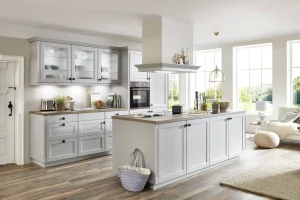

Rustic Kitchen Cabinet Turkey
Rustic Kitchen Cabinet Turkey: The Comprehensive Engineering, Material Science, and Sourcing Guide for Modern-Rustic and Traditional Timber Cabinetry Systems
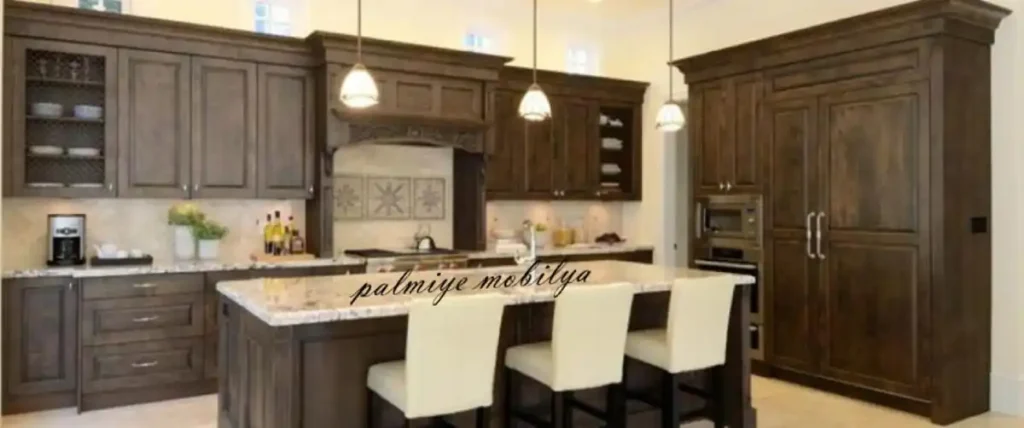
The global resurgence of rustic kitchen design reflects a deep-seated architectural desire to re-introduce raw, organic textures, authentic material narratives, and historical depth into contemporary residential living. Unlike minimalist design typologies that emphasize slick, flat planes and sterile geometries, rustic cabinetry celebrates the inherent natural imperfections of wood: deep grain variations, prominent knots, rugged mineral streaks, and wire-brushed open-pore surfaces.
Achieving a high-performance rustic kitchen under modern household conditions, however, requires an intricate paradox. The cabinetry must present a rugged, historical, and hand-crafted external aesthetic while simultaneously operating on advanced mechanical hardware, precision CNC-machined internal frameworks, and state-of-the-art structural moisture insulation.
Turkey has positioned itself as an elite global industrial powerhouse for this specialized architectural segment. Sourcing a Rustic Kitchen Cabinet Turkey system allows international real estate developers, interior architects, and volume distributors to unlock a unique supply matrix: immense local resources of premium European and Anatolian hardwoods, advanced German and Italian multi-axis panel processing machinery, and a rich cultural heritage of expert joinery craftsmanship.
This technical guide delivers a comprehensive analysis of the material engineering, mechanical kinematics, surface chemistry, and procurement economics behind Rustic Kitchen Cabinet Turkey solutions.
1. Architectural Typologies: Deconstructing the Modern Rustic Aesthetic
The term “rustic” encompasses several distinct design sub-movements, each requiring specific manufacturing parameters and architectural detailing. When planning a Rustic Kitchen Cabinet Turkey procurement project, specifying the exact stylistic framework is essential for coordinating production lines, finishes, and complementary hardware accessories.
Industrial Rustic:     [Wire-Brushed Open-Pore Timber] + [Black Powder-Coated Steel Inlays]
Farmhouse Rustic:      [Five-Piece Shaker Profile]     + [Hand-Applied Light Patina Glazes]
Chalet / Mountain:     [Heavy-Knot Solid Hardwoods]    + [Thick Face-Frame Raised Panels]
The Primary Rustic Sub-Movements
1. The Modern-Rustic (Organic Contemporary) Hybrid
This style represents the fastest-growing segment in luxury urban developments. It balances clean, handleless lines or slim shaker frames with intensely textured, active wood grains. The cabinet box remains structurally minimalist, but the door front becomes a canvas of deep horizontal wood grains, wire-brushed finishes, and raw earth tones.
2. The Traditional Farmhouse / Country Aesthetic
Characterized by five-piece shaker profiles, tongue-and-groove vertical V-groove center panels, and visible structural joints. The color palette favors muted, painted matte finishes—such as sage greens, antiqued creams, and charcoal tones—often enhanced by hand-wiped accent glazes that settle into the profiles to create an aged look.
3. The Industrial Rustic / Loft Design
This typology introduces a heavy raw mechanical element into the kitchen architecture. It pairs rough-sawn timbers or distressed oaks with visible iron or black powder-coated steel structural bands, exposed rivet heads, and industrial wire-mesh panel inserts in upper wall cabinets.
4. The Chalet / Mountain Alpine Style
The most rugged variant, heavily utilizing solid timbers with high knot content, visible heartwood character, and thick raised-center panels. This style relies on heavy face-frame cabinetry structures where the doors are inset flush inside a visible outer wooden grid, mimicking classic mountain lodge carpentry.
2. Substrate Engineering: Balancing Natural Timber with Composite Stability
The biggest engineering challenge when manufacturing high-end rustic cabinetry is managing the physical behavior of natural solid wood. Timber is a dynamic, hygroscopic material that expands and contracts continuously in response to household humidity levels and cooking steam.
The Structural Risks of Unmanaged Solid Timber
If a kitchen manufacturer builds doors entirely out of raw solid timber without accounting for cross-grain expansion, the kitchen is susceptible to structural failure over multi-season cycles:
- Warping and Cupping: Large flat slab door fronts will cup or bow as the moisture content varies between the front face and the back face.
- Joint Fracturing: In a traditional five-piece door, the horizontal rails contract at a different rate than the vertical stiles, which can crack paint lines or snap internal dowel joins.
- Split Center Panels: Solid timber center panels constrained tightly inside a perimeter frame can crack down the middle if they lack sufficient expansion room to breathe during dry winter heating cycles.
The Modern Solution: Advanced Material Hybridization
To provide a lifetime structural warranty for a Rustic Kitchen Cabinet Turkey system, tier-one manufacturers utilize a smart mix of natural solid wood and highly stable engineered wood composites.
1. Engineered Timber-Veneered Shaker Profiles
For painted or stained rustic kitchens requiring long-term flatness, a hybrid five-piece door is constructed.
- The Frame Structure: Built from multi-layered, finger-jointed solid European ash, beech, or oak. Finger-jointing removes internal grain tension lines, rendering the stile or rail structurally straight.
- The Center Core Panel: Built from an 8mm or 12mm thick sheet of high-density Moisture-Resistant MDF (MR-MDF).
- The Face Envelope: The MR-MDF center core is over-laminated with a thick (0.6mm to 1.5mm) genuine sliced wood veneer of coarse-grain ash or oak. Because the core is inert MR-MDF, it remains flat and stable. Meanwhile, the outer veneer provides the realistic, deep tactile wood grain texture required for a rustic finish.
2. CNC Monolithic Deep-Routed Shaker Panels
For painted rustic looks, automated multi-axis CNC machines can rout traditional farmhouse profiles out of a single, thick (22mm) monolithic sheet of premium high-density MR-MDF. Because the door panel is carved from a single piece of composite wood, it has zero internal structural joints. This entirely eliminates the risk of joint separation or paint cracking over time, providing an excellent solution for high-volume residential developments.
3. Three-Ply Multi-Layer Solid Timber Construction
When absolute solid wood doors are demanded by high-tier architectural specifications, Turkish factories utilize a balanced three-ply cross-laminated timber methodology.
Top Layer:    [Solid Wood Lamella (Grain Longitudinal)] -> Thickness: 6mm
Middle Layer: [Solid Wood Core (Grain Perpendicular)]  -> Thickness: 10mm
Bottom Layer: [Solid Wood Lamella (Grain Longitudinal)] -> Thickness: 6mm
===========================================================================
Result: Fused Multi-Directional Tensile Network Eliminates Structural Warping
By gluing the middle wood layer at a precise 90-degree angle to the outer faces, the cross-directional wood fibers counteract each other’s moisture-induced expansion forces. This keeps the door panel flat under intense kitchen humidity variations.
3. Surface Engineering: Advanced Texturing and Coating Chemistry
The visual and tactile appeal of a rustic kitchen depends on the finishing treatments applied to the door faces. In the Rustic Kitchen Cabinet Turkey industry, achieving an authentic rustic feel requires a combination of physical texturing and chemical surface sealing.
1. Industrial Wire-Brushing and Open-Pore Texturing
To replicate decades of natural wind, rain, and touch wear on wood grain, raw veneered or solid doors are processed through multi-stage industrial wire-brushing machines.
- The Mechanical Action: Heavy rotating drums fitted with high-tensile steel or abrasive nylon wire bristles scrub the wood faces at high speeds. The bristles rake out the softer springwood fibers while leaving the harder, dense summerwood growth rings intact.
- The Result: A deep, rugged, three-dimensional textured relief that accentuates the natural grain valleys, allowing light and shadow to play across the surface of the cabinet front.
2. Saws-Cut and Distressing Techniques
For a more industrial or reclaimed timber aesthetic, doors undergo randomized mechanical distressing.
- Band-Saw Scarring: Linear, transverse micro-cuts are applied across the grain to mimic historical hand-milled lumber.
- Wormhole Piercing and Edge Rasping: Automated or artisan hand-applied detailing introduces minor imperfections, softened corners, and subtle distressing marks that mimic natural aging.
3. Chemical Finishes: Stains, Patina Glazes, and Matte Topcoats
Deep Penetrative Reactive Stains
Unlike standard surface stains that simply sit on top of wood fibers like liquid paint, reactive stains contain specialized chemical salts and tannins that interact directly with the natural acid structures inside European Oak and Chestnut. This darkens the wood grain from within, producing authentic, multi-layered weathered grays, deep earth browns, and smoked charcoal hues.
Hand-Applied Patina Glazing
To emphasize deep shaker profiles, a dark highlight glaze is applied across the painted or stained panel face and then wiped away manually using soft cloths. The glaze remains trapped in the deep corners and routed valleys of the door profile, creating a shaded look that highlights the cabinet’s architecture.
Ultra-Low-Gloss Acrylic Polyurethane Topcoats
Rustic cabinetry must avoid high light reflections. Turkish finishing lines apply premium, non-yellowing acrylic polyurethane topcoats formulated at an ultra-low gloss level (typically between 2 to 5 Gloss Units). These clear coats seal the wire-brushed wood surfaces entirely against kitchen grease, coffee spills, and moisture ingress while remaining invisible, preserving the raw, unlacquered look of natural wood.
4. Mechanical Hardware Kinematics: Managing High Kinetic Mass
Rustic cabinetry is heavy. The utilization of 22mm thick hybrid shaker frames, three-ply cross-laminated timber fronts, and large decorative mantle surrounds increases the weight of doors and drawers relative to standard modern minimalist slab models. This high structural mass requires high-capacity hardware lines to ensure smooth, reliable long-term operation.
High-Capacity Soft-Close Concealed Hinge Networks
Standard small-scale cabinetry hinges degrade rapidly under the continuous leverage weight of solid timber rustic door leaves, leading to sagging panels and misaligned shadow lines.
- Heavy-Duty Hinges: Turkish cabinet exporters integrate premium, multi-spring concealed cup hinges (such as Samet Master or high-tier European lines) featuring high-torque integrated hydraulic soft-close cylinders.
- Load Distribution: For tall rustic pantry columns or integrated refrigerator doors exceeding 1500mm in height and 15kg in weight, factories specify a minimum of four to five structural hinges per door leaf to distribute stress evenly across the cabinet carcass box.
Industrial-Grade Under-Mount Drawer Runner Systems
Deep drawers are a hallmark of traditional rustic kitchens, designed to store heavy cast-iron cookware, large ceramic serving platters, and dry pantry items.
High Dynamic Load: [Heavy Solid Front Panel] + [Cast-Iron Cookware Load] = Up to 70kg Kinetic Stress
Hardware Solution: [Under-Mount Synchronized Slides] + [Hydraulic Soft-Close Dampeners]
- Synchronized Runners: Under-mount slide networks are hidden completely out of sight beneath the drawer bottom panel, preserving the rustic timber aesthetic when the drawer stands open.
- Dynamic Stability: These runners feature mechanical synchronization rods linking the left and right rails, ensuring the drawer slides straight even if pulled unevenly by a single offset handle. Dynamic load configurations are specified at 40kg for standard drawers and up to 70kg for deep, wide pot drawer modules.
5. Architectural Space Planning and Module Integration
A truly successful Rustic Kitchen Cabinet Turkey project relies on precise spatial planning and structural tolerances during the architectural drafting phase. Rustic styling utilizing deep recesses, thick face-frames, and overlapping molding elements leaves no room for design oversights.
Navigating the Inset Face-Frame Alignment
If a luxury chalet style utilizing inset face-frame cabinetry is specified, the doors sit completely flush inside an outer wooden framework rather than resting on top of the cabinet edges.
Overlay Cabinetry: [Door Panel] sits completely on top of [Carcass Box Edge] = Highly Forgiving Tolerances
Inset Face-Frame:  [Door Panel] sits perfectly flush inside [Carcass Outer Grid] = Zero-Tolerance Precision
- Sub-Millimeter Precision: Inset configurations require an absolute uniform 3mm reveal gap around all four sides of the door leaf. Turkish manufacturing lines achieve this by processing both the outer face-frames and internal door panels on integrated CNC centers that maintain a cutting tolerance within 0.1mm.
- On-Site Leveling: The floor-leveling legs of base cabinetry must be dialed in perfectly on-site using cross-line laser levels. If the base boxes settle unevenly by even 1mm, the flush door leaves will catch against the outer face-frame grid.
Managing Ornate Molding and Scribe Clearance Zones
Traditional rustic installations incorporate wide decorative cornices along upper wall cabinets, thick vertical pilasters flanking cooking hearths, and heavy base plinths along the floor line.
- Wall Interference: If a rustic cabinet is placed directly adjacent to an uneven plaster wall, opening a deep-profile door can cause it to scratch against the masonry.
- Scribe Fillers: Layout designs incorporate matching, wire-brushed scribe fillers (typically 50mm to 75mm wide). Installation teams shave these down on-site to match the unique contours of uneven walls, ensuring the structural cabinet boxes remain square while allowing the doors to open past a full 90-degree angle without interference.
6. The Turkish Woodworking Infrastructure: Industry Scalability and Automation
Turkey has established itself as an agile manufacturing giant within the international furniture and cabinetry sectors. The country’s cabinetry industry successfully bridges the gap between old-world artisan texturing and high-capacity, automated manufacturing.
Major Industrial Furniture Clusters
Production of Rustic Kitchen Cabinet Turkey configurations is concentrated across several high-tech industrial hubs:
- İnegöl / Bursa: Known as the furniture capital of Turkey. This region features a highly dense supply chain where premium wood mills, timber kiln-drying operations, specialized paint-processing centers, and CNC cabinet factories run in close geographical proximity.
- Kayseri: An industrial mega-cluster optimized for high-volume modular production, utilizing massive automated setups capable of handling large-scale real estate development supply contracts with rapid turnaround times.
- Istanbul & Kocaeli Regions: Focus heavily on premium contemporary design, architectural customization, hand-wiped patina glazing, and complex multi-material integration for luxury residential markets.
Machinery Ecosystem and Advanced Automation Standards
Despite the rustic, hand-crafted appearance of the final product, the production floor of a top-tier Turkish cabinetry plant utilizes highly advanced manufacturing technology:
- Automated Material Management Systems: Raw timber panels and MR-MDF sheets are sorted and fed into cutting matrix lines via robotic overhead vacuum lifters, preventing damage and maximizing yield efficiency.
- Multi-Axis CNC Machining Centers (Homag & Biesse Ecosystems): Computerized nesting centers cut, profile, drill, and route panels simultaneously. This ensures that structural component configurations match design blueprints with absolute accuracy.
- Pressurized, Automated Spray Lines: Base primers, color stains, and clear protective topcoats are applied inside dust-free cleanrooms utilizing reciprocating multi-axis robotic spray arms. This achieves uniform film thicknesses across deep profile grooves, followed by specialized curing ovens to seal the finish against moisture.
[Robotic Board Selection] -> [Multi-Axis CNC Profile Routing] -> [Industrial Wire-Brushing Drum] -> [Automated Paint Line] -> [UV Curing]
Global Safety and Eco-Certifications
Turkish manufacturers producing for export operate under strict international regulatory frameworks:
- TS EN 14749: The official European safety standard governing domestic and kitchen storage units and worktops.
- FSC (Forest Stewardship Council) Certification: Guarantees that all natural timbers—such as European Oak, Beech, and Ash—are sourced from traceably audited, sustainably managed eco-forest reserves.
- E1 and E0.5 Formaldehyde Standards: Certifying that the resins used within engineered wood cores meet low volatile organic compound (VOC) emission standards, preserving safe indoor air quality.
7. Sourcing Economics: Sourcing Value and Procurement Metrics
For international B2B buyers, real estate procurement directors, and major wholesale importers, sourcing Rustic Kitchen Cabinet Turkey collections offers an elite value proposition by balancing premium material specifications with competitive structural costs.
B2B Cost Allocation Breakdown
Understanding the operational allocation of costs within a rustic kitchen line allows procurement managers to adjust specifications to meet strict project budgets without risking long-term performance failures.
[Premium Hardwood / Stable Core Materials: 30%] + [Wire-Brushed Finishing Treatments: 30%] + [High-Capacity Kinetic Hardware: 25%] + [Logistics & Protection: 15%] = 100% Sourcing Cost
- Finish Optimization: While a six-sided hand-wiped patina lacquer five-piece door stands at the highest tier of custom pricing, volume developers can optimize budgets by selecting CNC single-piece routed shaker doors finished on automated wire-brushing and spray lines. This preserves the essential rustic relief aesthetic while significantly reducing manufacturing labor cycle times.
- Hardware Tiering: Specifying high-capacity synchronized under-mount rails for main heavy pot drawers guarantees high durability where it matters most, while non-sprung push-to-open latch systems can be integrated into high-tall side accent cabinets to optimize total project hardware expenditure.
The Turkish Supply Chain Competitive Advantage
- Lower Total Operational Overhead: Turkey maintains highly competitive labor, energy, and facility overhead costs relative to Western Europe. These systemic operational savings translate into competitive per-unit wholesale costs for international purchasing groups.
- Total Vertical Supply Integration: Turkey does not rely on importing raw wood panels or chemical finishing primers. Major local chemical and timber conglomerates (such as Kastamonu Entegre and Yıldız Entegre) produce high-density raw materials directly inside the country. This limits factory exposure to global trade disruptions and protects pricing matrices from international shipping volatility.
- Currency Conversion Multipliers: The commercial valuation of the Turkish Lira against the US Dollar and Euro provides substantial purchasing power leverage for international sourcing groups executing volume procurement contracts.
8. Logistical Engineering and Protective Export Packaging
Transporting rustic cabinetry with deeply textured surfaces, prominent profile extensions, and substantial structural weight requires multi-layered protective packaging to ensure zero damage upon delivery at the construction job site.
Comprehensive Multi-Layer Export Packaging Protocols
Turkish export logistics teams pack bathroom cabinetry to meet rigorous global transport safety testing standards (e.g., ISTA packaging guidelines):
[Cabinet Component Core] -> [Micro-Foam Wrap Layer] -> [High-Density EPS Corner Bumpers] -> [5-Ply Corrugated Outer Box] -> [Palletized Shrink Encapsulation]
- Micro-Foam Surface Interleaving: Every wire-brushed or distressed front panel face is completely interleaved with an anti-static micro-foam sheet to eliminate vibration-induced friction scratches during maritime or overland freight transit.
- High-Density EPS (Expanded Polystyrene) Corner Protectors: Molded foam block corner guards are applied to all outer points of the cabinet carcass. This creates a dedicated impact absorption cushion that shields vulnerable cabinet corners and delicate crown moldings from drops or sudden shifting during heavy container handling.
- Heavy Duty 5-Ply Corrugated Boxing: Packaged components are sealed inside moisture-treated, heavy-grade 5-ply corrugated cardboard shipping boxes that resist collapsing under stacking pressures inside high-cube cargo containers.
- Vacuum Heat-Shrink Wrapping and Palletization: Boxes are securely stacked on reinforced wooden pallets, corner-reinforced with thick structural cardboard L-bars, and wrapped in heavy industrial plastic shrink film. This isolates the wood products from high marine atmospheric humidity and salt-air corrosive elements during extended oceanic sea routes.
Geographical Proximity and Global Transit Timelines
Turkey’s logistical infrastructure serves as an efficient gateway to major global consumer markets:
- Continental Europe Overland Road Distribution: Sourced cabinetry shipments from industrial hubs like Bursa or Istanbul can arrive via direct trucking fleets to central European distribution terminals (e.g., Germany, France, Austria) within 4 to 7 days, providing fast door-to-door delivery that completely bypasses congested maritime ports.
- Deep-Water Maritime Freight Channels: Major container ports like Ambarlı (Istanbul), Izmir, and Mersin operate weekly scheduled container vessel sailings. Average maritime transit times to the United Kingdom range between 10 to 14 days, while transit to the East Coast of the United States averages 18 to 24 days, allowing developers to run lean supply schedules.
9. Technical Installation Methodology and Long-Term Field Maintenance
The ultimate success of a Rustic Kitchen Cabinet Turkey installation relies on precise execution during the final centimeter of on-site structural assembly. In a high-end rustic layout featuring detailed moldings, heavy profiles, and substantial structural weight, minor installation errors will cause door binding, hardware misalignment, and potential moisture management vulnerabilities.
Step-by-Step Professional Calibration and Anchorage Sequence
Phase 1: High-Precision Laser Wall Mapping and Shimming
- Laser Baseline Mapping: Installers must map out the target kitchen wall utilizing a self-leveling 360-degree cross-line laser array. Never assume walls or subfloors are completely square or level, especially in older homes or rustic renovations.
- Base Leg Calibration: Establish the absolute highest point of the floor and use the heavy-duty adjustable cabinet feet to align all base carcasses to this level plane. If the boxes are misaligned by even 1mm, long horizontal stone countertops and crown moldings will not track straight, throwing off the shadow lines across the entire kitchen length.
Phase 2: Structural Carcass Interlocking and Wall Anchoring
- Interlock Binding: Never treat rustic cabinet boxes as isolated standalone elements. Once leveled, clamp adjacent cabinet frames tightly together using heavy-duty face-frame clamps and lock them together structurally using male-to-female furniture connector sleeve screws to eliminate any micro-gaps.
- Wall Anchorage: Secure the unified framework directly into the wall studs using high-tensile structural wood screws, utilizing high-impact shims behind the cabinet back panels to fill any gaps caused by uneven plasterwork, preventing frame distortion.
Phase 3: Precise Kinetic Hardware and Profile Tuning
- Miter Profile Cutting: Cut decorative crown moldings, light pelmets, and corner decorative panels using a high-tooth-count carbide miter saw blade to ensure crisp, gap-free 45-degree corner joints. Secure them firmly from the inside of the cabinet box using low-profile framing screws.
- Three-Dimensional Hinge Calibration: Utilize the built-in 3D adjustments on the heavy-duty soft-close hinges to establish consistent 3mm shadow reveals between all traditional profile door panels:
Hinge Arm Adjustment Screw A: Calibrates Lateral Horizontal Position
Hinge Arm Adjustment Screw B: Calibrates Vertical Elevation Alignment
Hinge Arm Adjustment Screw C: Calibrates Depth Tension (Front-to-Back Flushness)
- Runner Play Adjustments: For drawers and deep pull-out larder systems, calibrate the depth adjustment pins on the runner rails. A consistent play gap must be maintained to allow soft-close plungers to engage cleanly without requiring excessive closing force.
Long-Term Field Preventive Maintenance Protocols
To maximize the operational service life of high-end rustic cabinetry systems in high-traffic kitchen environments, users should adhere to strict maintenance guidelines:
- Forced Mechanical Ventilation Controls: Small or enclosed kitchens generate high concentrations of heat and humidity rapidly during cooking. Always activate kitchen range hoods during culinary operations and wipe away any condensation that settles on the undersides of upper wall cabinets immediately to prevent long-term edge-band or lacquer stress.
- Dishwasher Steam Ingress: Do not crack open a dishwasher immediately after its cleaning cycle completes. The sudden, concentrated release of superheated steam can gradually degrade the adhesive bond or micro-matte lacquer coatings on adjacent sink base doors over years of repetition. Allow the dishwasher to cool down fully internally before opening.
- Correct Cleaning Formulations: Clean wire-brushed open-pore and distressed wood doors exclusively with an ultra-soft microfiber cloth slightly dampened with lukewarm water and a 1% solution of mild, pH-neutral liquid soap. Never use paper towels (which can snag on wire-brushed wood fibers) or abrasive chemical cleaning sprays containing ammonia, acetone, or bleach, as these will dissolve the protective matte acrylic polyurethane topcoat.
10. Conclusion: Securing Sourcing Success with a Turkish Supplier
Sourcing a Rustic Kitchen Cabinet Turkey system delivers an elite, data-proven solution for global developers, general contractors, and major furniture distributors seeking to deliver classic style alongside modern engineering efficiency. By leveraging Turkey’s immense automated industrial scale, high-density stable cores, and advanced wire-brushing texturing lines, international buyers can procure high-end, contemporary storage solutions that withstand intense environmental demands while offering exceptional return-on-investment value.
To guarantee absolute operational success when finalizing your procurement contract and production specifications, adhere to these fundamental sourcing guidelines:
- Select Substrates by Finishing Type: Specify single-piece routed MR-MDF panels for painted farmhouse styles to prevent joint cracking, or wood-veneered stable cores paired with solid hardwood frames for stained rustic looks.
- Enforce Advanced Texturing Specifications: Mandate industrial wire-brushing and low-gloss acrylic polyurethane coatings (under 5 Gloss Units) to preserve the realistic tactile depth of the wood grain while protecting it from grease and vapor ingress.
- Deploy High-Capacity Functional Hardware: Insist on heavy-duty, multi-spring concealed hinges and synchronized under-mount slide networks with high dynamic load ratings (up to 70kg) to comfortably handle the weight of traditional profiles.
- Align Packaging with Site Realities: Choose flat-pack packaging to maximize container shipping space and density, or pre-assembled rigid boxes to minimize expensive installation labor costs on the construction site.
By combining advanced material science with strict architectural installation tolerances, your rustic kitchen installation will stand as a resilient, visually rich, and hyper-functional monument to modern timber design and engineering.





Şunları da sevebilirsiniz
Lacquered Room Doors Production Turkey
Solid Wood Door Turkey