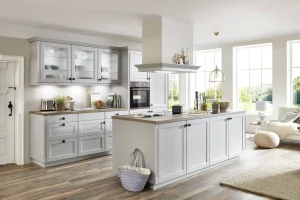

Ready-Made Kitchen Cabinet Turkey
Ready-Made Kitchen Cabinet Turkey: The Definitive Industrial Guide to Flat-Pack Sourcing, Modular Spatial Engineering, Substrate Material Science, and Global Export Logistics
When coordinating a high-velocity residential development, managing an international e-commerce supply chain, or executing an optimized property renovation, specifying a premium modular solution from a leading manufacturer of a Ready-Made Kitchen Cabinet Turkey represents the ultimate integration of capital efficiency, rapid project deployment, and world-class furniture engineering. The modern kitchen has evolved past its basic functional roots to become the defining architectural and valuation anchor of residential real estate. Sourcing prefabricated or ready-to-assemble (RTA) cabinetry arrays introduces severe technical demands that differ substantially from slow, hyper-customized millwork.
A modular kitchen line must deliver extreme dimensional accuracy, universal hardware swap-ability, and uncompromised surface resilience. It must be engineered to withstand intensive thermal fluctuations, localized steam exposure from household appliances, and daily mechanical abrasion, all while arriving in high-density flat packaging that optimizes international shipping containers down to the last cubic millimeter.
Turkey has positioned itself as an uncompromised global superpower in the industrialized production of modular and ready-made cabinetry networks. By combining a multi-generational Mediterranean tradition of woodworking with massive, multi-million-dollar investments in fully automated European production lines (such as multi-axis German and Italian CNC edge-processing systems), Turkish mega-factories export million-scale flat-pack units annually to high-velocity development markets across Europe, North America, the United Kingdom, and the Middle East. This exhaustive industrial guide delivers an master-level analysis of the manufacturing ecosystems, material engineering frameworks, dimensional modular standards, and procurement logistics governing a Ready-Made Kitchen Cabinet Turkey. This resource is explicitly developed for international interior architects, real estate developers, furniture wholesalers, private-label procurement managers, and commercial distributors seeking to maximize supply chain value.
1. Sourcing Advantages of a Ready-Made Kitchen Cabinet Turkey Corridor
Procuring industrialized modular cabinetry runs from a premier manufacturer specializing in a Ready-Made Kitchen Cabinet Turkey provides an array of structural, economic, and logistical advantages that stand out on the competitive global market.
Automated Industrial Scale and Price Optimization
Unlike fragmented artisanal carpentry workshops, the Turkish ready-made furniture sector relies on massive, vertically integrated industrial centers primarily located in İnegöl (Bursa), Kayseri, Adana, and the ultra-modern industrial parks flanking Istanbul and Kocaeli. These mega-facilities process thousands of high-density core board sheets per shift using computerized linear slicing machines, automated nesting routers, and high-velocity robotic handling networks. This level of extreme industrial scaling eliminates material waste, minimizes human labor costs per unit, and optimizes energy consumption. As a direct result, global supply chain managers can acquire high-density, beautifully finished modular kitchen arrays at a fraction of the cost of localized Western European fabrication, without a single compromise on substrate density or hardware lifecycle thresholds.
Geopolitical Agility and Intermodal Logistics
- Frictionless European Trade Integration: Under the established EU-Turkey Customs Union, industrial shipments originating from Turkey can enter European Union member states with 0% preferential customs tariffs when accompanied by an authorized A.TR Movement Certificate. This eliminates severe import duty penalties that affect other global supply corridors.
- Rapid Multi-Route Logistics: Sourcing a Ready-Made Kitchen Cabinet Turkey allows supply chain managers to deploy highly flexible, intermodal delivery routing. Overland TIR trucking configurations can transit from western Turkish factories directly to Central European distribution warehouses within 5 to 8 days, completely bypassing ocean port delays. For transcontinental markets like North America, direct ocean freight containers depart daily from major maritime deep-water shipping centers including Ambarlı (Istanbul), İzmir, and Mersin ports.
2. Advanced Material Science: Core Substrates and Deflection Engineering
The long-term structural survivability of any line of a Ready-Made Kitchen Cabinet Turkey is determined entirely hidden beneath its exterior decorative film. Because ready-made cabinetry is shipped disassembled and must be built seamlessly on-site by developers or end consumers, the internal density, tensile cross-grain strength, and screw-holding capacity of the underlying substrate must meet uncompromising technical tolerances. A modular cabinet carcass must remain structurally rigid and completely level under the heavy downward loads of thick natural stone, quartzite, or engineered porcelain countertops.
Comprehensive Comparison of Modular Core Substrates
| Substrate Core Classification | Structural Density Index | Internal Binder Adhesives | Transverse Swelling Threshold | Mechanical Fastener Screw-Holding | Best Functional Application Profile |
|---|---|---|---|---|---|
| High-Density MR-MDF (Moisture-Resistant) | 780–830 kg/m³ | Melamine-urea-formaldehyde resins infused with hydrophobic wax emulsions | Minimal (<4% over 24-hour immersion): Maximum structural resistance to ambient steam. | Exceptional; Supports high-repetition hinge adjustments without fiber tear-out. | The absolute baseline standard for premium ready-made kitchen facades, CNC-profiled Shaker doors, and handleless cabinet fronts. |
| High-Performance MFC (Melamine-Faced Chipboard) | 650–720 kg/m³ | Saturated synthetic resins compressed under intense multi-ton hydraulic pressure | Controlled (<10% swelling index): Highly stable under normal dry atmospheric parameters. | Excellent when fitted with industrial Euro-screws and steel cam-lock pins. | The industry-standard choice for maximizing cost-efficiency across internal carcass panels, gables, and shelving layouts. |
| Marine-Grade Multi-Ply Plywood | 680–720 kg/m³ | Cross-laminated hardwood veneer plies bonded with exterior phenolic resins | Zero Core Delamination: Immune to structural expansion even under prolonged direct water exposure. | Maximum tensile cross-grain holding capacity across structural hardware. | High-specification sink base carcasses, under-counter integrated appliance surrounds, and installations in high-humidity tropical zones. |
| Standard Low-Density Particleboard | 500–580 kg/m³ | Low-cost basic urea-formaldehyde chemical binders | Extremely Poor (>18% expansion): High risk of rapid structural collapse, bubbling edges, and core sagging. | Poor; Internal cell voids lead to stripped fastener threads during initial assembly. | Heavily rejected by premium Turkish exporters; restricted to low-cost, budget mass-market flat-pack lines. |
The Chemistry of Edge Protection: PUR vs. EVA Adhesives
In modular ready-made cabinetry, the absolute frontier of defense against catastrophic failure is the cut edge of the board. Lower-tier mass production facilities utilize standard EVA (Ethylene Vinyl Acetate) hot-melt glues to apply edge bands. EVA glues can soften when exposed to thermal zones near ovens or dishwashers, creating microscopic entry points for ambient cooking steam. When moisture vapor bypasses an EVA seam, it is drawn deep into the core board, causing rapid edge-blistering and permanent panel warp.
To eliminate this vulnerability, leading exporters of a Ready-Made Kitchen Cabinet Turkey utilize industrial PUR (Polyurethane) reactive hot-melt adhesives applied via computerized multi-roller machines within positive-pressure edge-banding corridors (such as Homag or Biesse line setups). PUR adhesive triggers an irreversible chemical cross-linking polymerization reaction with ambient moisture during its curing phase. This creates an un-breachable, heat-proof, and completely waterproof bond line. The resulting seam ensures that the protective ABS edge band remains fused to the substrate core, completely isolating the wood fibers from environmental moisture over multi-decade lifecycles.
3. Dimensional Standardization and Modular Structural Anatomy
The international success of a Ready-Made Kitchen Cabinet Turkey system relies on strict adherence to universal dimensional coordination standards. This precise modular spacing ensures that prefabricated cabinetry units integrate seamlessly with built-in appliances, architectural utility paths, and standard plumbing setups worldwide.
The Standard Metric Dimensional Grid
Turkish modular kitchen production operates on a highly integrated metric system that matches global architectural guidelines:
- Standard Base Cabinet Heights: Prefabricated base units are manufactured at a structural height of 720 mm or 760 mm. This chassis height is designed to sit on top of 100 mm to 150 mm adjustable leveling legs. Once capped with a standard 20 mm to 40 mm natural stone or quartz countertop, the finished kitchen island or counter row settles at an ergonomic working height of 850 mm to 910 mm off the subfloor.
- Standard Modular Width Enclosures: Ready-made carcases are produced in fixed structural widths increasing in standardized increments: 150 mm (for slim pull-out spice racks), 300 mm, 450 mm, 600 mm (the standard baseline width for integrated dishwashers, built-in ovens, and under-counter refrigerators), 800 mm, 900 mm, and 1200 mm for expansive double-door pan storage units.
- Carcass Internal Depth Dimensions: Base cabinets are configured to a standard external depth of 560 mm to 580 mm, allowing for a clean 20 mm to 40 mm countertop overhang when set against a wall. Wall-mounted upper units are limited to an external depth of 320 mm to 350 mm, preventing head-impact hazards while providing ample space for standard dinner plate storage.
The System 32 Boring Blueprint
To guarantee that international distributors or end-consumers can install shelves, wire baskets, pull-out carousels, and hinges smoothly without complex measuring tools, factories utilize the universal System 32 blueprint.
    +-----------------------------------------------+

    |   o  (37mm offset from front boundary edge)   |
    |   o                                           |
    |   o  <--- 32 mm pitch between center points   |
    |   o                                           |
    |   o  (5mm diameter system boring holes)       |
    |   o                                           |
    +-----------------------------------------------+
All interior carcass gables are bored on automated boring lines with double rows of 5 mm diameter holes. These vertical holes feature a precise 32 mm pitch spacing between center points and sit at a fixed 37 mm offset distance from the front and rear panel boundaries. This precise configuration allows for fast hardware installation on assembly lines or on the project site.
4. Comprehensive Analysis of Ready-Made Kitchen Cabinet Turkey Formats
Turkish production platforms deliver an extensive range of modular ready-made styles and surface levels, allowing procurement officers to align orders with specific market segments.
1. Modern Minimalist Handleless Models (Recessed Gola Track Systems)
Modern minimalist options of a Ready-Made Kitchen Cabinet Turkey focus on sleek, clean lines and uninterrupted geometric surfaces.
- Structural Integration: Instead of drilling standard handle pull points into the cabinet fronts, the carcass gables are manufactured with pre-milled recesses that accept continuous, C-shaped or J-shaped extruded aluminum horizontal tracks (Gola Profiles). This track sits recessed behind the front face panel, allowing users to comfortably reach behind the door or drawer to pull it open, maintaining a completely flush cabinet wall surface.
- Target Audience: Ideal for high-end urban apartment developments, contemporary architectural layouts, and projects where maximizing the reflection of natural ambient light is a key design priority.
2. Timeless Transitional Shaker Models
Shaker-style models bridge traditional aesthetics and modern manufacturing, presenting an incredibly popular, evergreen option for international property flippers and kitchen retailers.
- Manufacturing Fabrication: Rather than utilizing slow, five-piece wood joinery methods, mass-production lines cut Shaker panels from single slabs of high-density MR-MDF using automated CNC nesting routers. This single-slab manufacturing path removes structural joinery lines that can shift over time, which completely avoids hairline cracks developing in the overlying protective finish.
- Visual Appeal: These modular doors feature a clean, recessed 1-step center panel with straight, square interior profiles, delivering an elegant look when finished in matte painted films or textured wood-grain foils.
3. High-Velocity Melamine and High-Gloss PET Models
Engineered specifically for exceptional durability and rapid turnarounds, these models are well-suited for high-volume housing projects and rental developments.
- Surface Composition: Carcass panels and flat door fronts are wrapped in high-pressure melamine layers or co-extruded PET (Polyethylene Terephthalate) films fused onto stable substrates using PUR adhesives.
- Performance Index: These materials create a non-porous surface that is highly resistant to micro-scratches, household cleaning chemicals, and water rings, making them easy to clean and maintain over decades of active family use.
5. Advanced Surface Technologies and Protective Barriers
The long-term aesthetic survival of a Ready-Made Kitchen Cabinet Turkey relies entirely on the technical performance of its outer decorative shield. Turkish manufacturers implement advanced chemical coating and foil lamination application fields to maximize face resilience.
High-Gloss Polyurethane and UV-Cured Lacquering
For premium painted finishes, Turkish factories utilize multi-stage industrial lacquering sequences within positive-pressure, dust-free down-draft cleanrooms:
- Automated Flat Sanding: Wide-belt diamond sanders level the core board to remove microscopic surface variations, preventing the “orange-peel” distortion effect on highly reflective cabinets.
- Polyester Base Priming: Multiple coats of high-build primers seal the wood fibers completely, creating an un-breachable hydrophobic barrier.
- Ultraviolet Polymerization Tunnels: Liquid acrylic-urethane lacquers are applied via precision roller-coaters and immediately entered into automated UV-curing chambers. High-intensity ultraviolet radiation triggers an instantaneous cross-linking reaction within the liquid lacquer, transforming it into a hard, glass-like shield with a gloss index exceeding 95 gloss units. These finishes include integrated UV blockers to prevent whites from turning yellow under direct sunlight.
Excimer Laser Super-Matte and Anti-Fingerprint Curing
For contemporary matte designs, top-tier factories utilize Excimer Laser Surface Treatments:
- Surface Alteration: The wet topcoat layer is exposed to short-wave excimer laser light within a nitrogen-filled chamber. This treats only the uppermost surface molecules, causing the liquid coat to contract and form a microscopic, velvet-textured surface structure.
- Light Scattering Metrics: This micro-texture scatters light waves uniformly across the panel, creating a true matte finish with zero specular reflection. fingerprint oils are absorbed across the microscopic peaks, making the cabinets completely fingerprint-resistant and exceptionally soft to the touch.
6. Motion Hardware Engineering: Lifecycles and Corrosion Defense
The daily user experience of a high-volume Ready-Made Kitchen Cabinet Turkey array is defined by its internal mechanical hardware. A kitchen door that sags or a drawer box that binds will immediately devalue an otherwise beautiful property development.
Anti-Corrosion Plating Protocols
Kitchen cabinets operate in demanding domestic environments where cooking grease, high humidity from boiling water, and dishwasher steam can quickly degrade standard metals.
- The Specification Benchmark: Reliable Turkish exporters fit their cabinetry lines with high-performance concealed hinges and smooth drawer runners from world-leading motion brands like Blum (Austrian), Hettich (German), and Turkey’s premier global brand, Samet.
- Salt-Spray Performance Verification: These motion systems undergo extensive industrial salt-spray testing cycles to verify excellent resistance to oxidation. This ensures the internal hydraulic pistons stay rust-free and smooth over a certified lifecycle of at least 80,000 to 100,000 opening and closing cycles under full weight capacity loads.
Internal Mechanical Ergonomics
- Concealed Hydraulic Soft-Close Hinges: Clip-on hinges feature integrated miniature fluid dampers that catch the cabinet door during closing, pulling it shut silently and smoothly to prevent impacts against the carcass edges.
- Full-Extension Tandem Box Drawer Systems: Drawer runners utilize heavy-duty synchronous steel slides that offer complete visibility and easy access to items stored deep in the back of the drawer. These tracks glide smoothly on low-friction cylinder rollers and can support downward weight loads of up to 40 kg to 70 kg per drawer unit without binding or bowing.
7. Packaging Science: High-Density Flat-Pack Engineering
The true cost of international cabinetry procurement is heavily impacted by maritime and overland freight logistics. A major competitive advantage of a Ready-Made Kitchen Cabinet Turkey line is the advanced engineering applied to its Flat-Pack (Ready-to-Assemble – RTA) packaging logistics.
 [Flat-Pack Box Architecture]

+-----------------------------------------------------------+

| [A] Heavy Double-Wall Corrugated Cardboard Outer Shell    |
|   +-----------------------------------------------------+ |
|   | [B] High-Density Expanded Polystyrene Edge Guards   | |
|   |   +-----------------------------------------------+ | |
|   |   | [C] Micro-Foam Soft Separation Interlayers    | | |
|   |   |   +-----------------------------------------+ | | |
|   |   |   | [D] Disassembled CNC Pre-Bored Panels   | | | |
|   |   |   +-----------------------------------------+ | | |
|   |   +-----------------------------------------------+ | |
|   +-----------------------------------------------------+ |
+-----------------------------------------------------------+
Container Volume Optimization Metrics
Instead of shipping fully assembled, hollow cabinet boxes that waste container volume by transporting empty air, ready-made components are flat-packed. This high-density packaging path maximizes shipping space:
- FCL Capacity Multiplier: A single standard 40-foot High Cube (HC) ocean container can typically accommodate approximately 80 to 120 fully assembled kitchen units. However, when utilizing optimized flat-pack shipping boxes, that identical container volume can hold up to 350 to 500 disassembled modular cabinets, reducing the shipping cost per unit significantly.
Multi-Layer Protective Packaging Architecture
To guarantee that flat-pack shipments arrive at international warehouses with zero transit damage or finish marring, Turkish exporters use a multi-layer packaging structure:
- Micro-Foam Soft Interlayers: Every finished front face panel is separated by a soft micro-foam or PE sheet to eliminate surface friction and prevent abrasion scratches during ocean transport.
- High-Density EPS Edge Guards: The interior box edges are lined with thick expanded polystyrene (EPS) profile cushions to absorb heavy drops and corner impacts from forklifts.
- Double-Wall Corrugated Shells: The outer shipping box is crafted from industrial-grade, heavy-duty double-wall corrugated cardboard sealed with moisture-resistant tape.
- ISPM-15 Heat-Treated Palletizing: Boxed kits are stacked onto sturdy wooden pallets that are fully heat-treated and certified in compliance with ISPM-15 international agricultural regulations, ensuring efficient clearance at global customs checkpoints.
8. Global Import-Export Logistics, Customs, and Customs Union Agreements
Successfully managing the customs clearance pipeline is vital to avoiding unexpected transit delays, port storage fees, and tariff penalties at your international destination terminal.
Essential Export-Import Documentation Checklist
To support fast customs processing, the documentation package for a Ready-Made Kitchen Cabinet Turkey shipment must be meticulously prepared and include the following:
- The Commercial Invoice: A detailed commercial document containing explicit item breakdowns, exact material descriptions, values per item, and the currency used for the transaction.
- The Packing List: Details the weight, dimensions, container numbers, and exact packaging breakdown for the entire shipment.
- The Bill of Lading (B/L) or Air Waybill: The legal contract between the shipper and the carrier, detailing the cargo destination and handling terms. For overland freight to Europe, an CMR consignment note is issued.
- The Certificate of Origin: An official document certifying the country where the goods were manufactured, vital for calculating correct tariff rates.
- The A.TR Movement Certificate: For shipments destined for the European Union, this certificate is essential. Under the EU-Turkey Customs Union agreement, an EUR.1 certificate allows qualifying manufactured goods to enter the EU with 0% preferential customs tariff duties, offering a significant cost advantage over non-Union manufacturing hubs.
Harmonized System (HS Codes) Classification
To ensure accurate tariff calculation and regulatory compliance, bathroom furniture must be classified under the correct Harmonized System (HS) codes. Incorrect classification can lead to customs delays, penalties, or miscalculated duty assessments.
- HS Code 9403.40.10: Prefabricated wooden kitchen furniture, fitted base units, and wall cabinets.
- HS Code 9403.40.90: Other wooden kitchen cabinet models, including modular shelving and panel components.
- HS Code 9403.91.00: Structural parts and components explicitly milled for wooden furniture assemblies.
9. Comprehensive Technical Comparison: Sourcing Matrix
To assist procurement directors in making a data-driven investment decision, this matrix evaluates the performance of a Ready-Made Kitchen Cabinet Turkey array against alternative global manufacturing solutions.
| Strategic Sourcing Metrics | Premium Modular Ready-Made Cabinets Turkey | Standard Mass-Market Sourcing Hubs | Custom Millwork Sourcing Channels |
|---|---|---|---|
| Baseline Core Density | High-Density MR-MDF or structured MFC (750-830 kg/m³) | Low-density commercial particleboards (<550 kg/m³) | Solid wood cores or premium blockboard options |
| Adhesive Water Defense | Cross-linked PUR Adhesives standard across exposed seams | Standard EVA hot-melt glues (prone to steam loosening) | Traditional D3/D4 wood adhesives applied by hand |
| Fastener Connection Precision | High-precision System 32 CNC boring with zero-tolerance spacing | Variable drilling accuracy with manually set equipment | Custom dowel drillings tailored to unique site layouts |
| Container Loading Density | Maximum Flat-Pack Optimization (Flat boxes compress volume) | Variable; Mixed flat-pack and pre-built packaging runs | Low density; Pre-assembled boxes waste container air volume |
| Tariff Duty Structure (EU Market) | 0% Customs Duty via authorized A.TR certificates | Subject to standard import tariffs and potential anti-dumping fees | 0% Intra-EU trade structure, but carries high baseline fabrication costs |
| Asset ROI Index | Excellent; High durability metrics paired with optimized wholesale entry pricing | Low upfront cost but short lifespan yields frequent call-backs | Long lifetime but high upfront capital costs reduce near-term ROI |
10. Regional Profiles of Turkey’s Ready-Made Cabinetry Clusters
The kitchen manufacturing industry in Turkey is organized into specialized regional industrial hubs. Sourcing teams target specific clusters based on project size, required finishes, and logistical goals.
İnegöl (Bursa): Sizing and Automated Precision Engineering
İnegöl operates as the industrialized epicenter of furniture manufacturing in Turkey, housing massive production facilities equipped with top-tier German and Italian automated machinery.
- Technical Strengths: High-speed CNC nesting machines, automated continuous linear edge-banders, and cleanroom UV-curing lines.
- Market Positioning: This cluster is the premium selection for large property developers, contract architects, and international wholesalers who require hundreds of uniform, modern minimalist units delivered on strict, dependable delivery schedules.
Kayseri: High-Capacity Modular Mass Production
Kayseri hosts some of the largest furniture manufacturing campuses in the EMEA region, optimized for massive production volumes and extreme standardization.
- Technical Strengths: Large-scale automated flat lamination systems, high-volume automated line routing, and highly standardized packaging lines.
- Market Positioning: This cluster excels at private-label OEM/ODM manufacturing for global retail chains and large e-commerce brands requiring high volume capacity and exceptional cost-per-unit value.
Istanbul and the Marmara Perimeters: Design-Led Smart Integration
Facilities located in the modern industrial perimeters of Istanbul work in close alignment with global interior design trends and advanced materials.
- Technical Strengths: Excimer laser super-matte processing, advanced PET foil application lines, and seamless integration of low-voltage smart electronics and hidden handle tracks.
- Market Positioning: Perfect for premium urban housing developments, high-density residential towers, and international retail brands looking for sophisticated contemporary design details and top-tier quality certifications.
11. Thermodynamic Engineering: Expansion Joints and Structural Calibration
Ready-made kitchen cabinetry contains organic wood fibers that retain natural thermodynamic properties. Wood expands and contracts as ambient relative humidity and temperature change. To ensure that a Ready-Made Kitchen Cabinet Turkey system maintains its millimetric alignment across changing seasons, factory engineers apply specific structural designs.
Panel Bowing Mitigation
When a decorative surface material (like a high-gloss PET foil or a protective melamine layer) is pressed onto the front face of a substrate core, it applies an asymmetric structural tension to that side of the board as it cools. If the back of the panel is left bare or finished with a lighter, lower-grade material, the door will bow or cup over time due to uneven surface tension as humidity shifts.
- The Balancing Sheet Rule (Astar Panel): Top-tier Turkish factories eliminate this issue by executing a completely symmetrical lamination protocol. Whatever material weight and thickness is applied to the front face is applied identically to the back face of the core board using the same PUR adhesive layer. This matching backer layer applies an equal and opposite force, counteracting internal tension forces completely and keeping the cabinet doors perfectly flat and warp-free across changing seasonal humidity levels.
+-----------------------------------------------------------+ -> High-Performance PET Foil or Melamine Front Face
============================================================= -> PUR Waterproof Bonding Interface Film

|                                                           |
|                 High-Density MR-MDF Core                  |
|                                                           |
============================================================= -> PUR Waterproof Bonding Interface Film
+-----------------------------------------------------------+ -> Matching Balance Backing Sheet (Matches Front Face Tension)
Advanced PUR Sealing for Hardware Boring Points
The most critical moisture vulnerabilities often occur where holes are bored into a panel to mount hinges, drawer slides, and assembly fittings. These cuts expose the raw, absorbent inner wood fibers to the air, bypassing the protective exterior surface shield.
- Sealing Internal Cutouts: High-end Turkish factories use automated boring machinery that cuts clean openings without fracturing the surrounding substrate core. During final assembly, these internal cutouts are sealed with a protective layer of water-resistant PUR resin or hydrophobic primers. This extra step ensures that even if steam bypasses a hinge plate, it cannot penetrate the substrate core, protecting the cabinet from localized swelling and structural failure.
12. On-Site Assembly, Leveling, and Hardware Alignment Protocol
To ensure that modular cabinetry units function flawlessly and look beautiful on the project site, the installation team must follow a precise assembly and leveling protocol.
Step 1: Floor Mapping and Leveling Legs Calibration
- Establishing the Base Plane: Installers use high-precision 3D self-leveling rotary laser lines to identify the highest point of the kitchen subfloor. Base cabinet chassis are set in position, and their heavy-duty adjustable polymer legs are turned to establish a perfectly level horizontal plane across the entire counter run. If the base alignment is off by even a millimeter, the vertical lines between tall doors will look misaligned, and the drawers may experience uneven mechanical wear.
Step 2: Mechanical Carcass Unification
- Creating a Solid Monolithic Block: Instead of leaving cabinets as loose individual units, adjacent carcasses are mechanically locked together. Installers clamp the cabinet side walls tightly flush and use specialized steel binding sleeve screws to bolt the units into a single, highly rigid structure. This step ensures that the cabinetry remains perfectly stable and can easily handle the heavy weight of natural stone, quartz, or porcelain countertops without shifting or settling.
Step 3: Mechanical Wall Anchoring
- Preventing Structural Tipping: The unified cabinetry row is anchored deep into the wall framing structure using heavy-duty, corrosion-coated structural timber screws through the rear cabinet rails, ensuring complete stability under heavy kitchen loads.
Step 4: Fine-Tuning 3D Hinge Adjustments
- Perfecting Millimetric Gaps: Once the countertops are secured and the cabinets settle under the final weight load, installers perform a final calibration of the 3D adjustable hinges and drawer runners. Using the adjustment screws, they fine-tune the front panels along the X, Y, and Z axes to ensure all door gaps maintain a uniform 2mm spacing and that the soft-close mechanisms glide shut silently and smoothly.
13. Sourcing Verification: Identifying Elite Turkish Export Partners
To ensure you are partnering with an elite exporter and manufacturer of a Ready-Made Kitchen Cabinet Turkey rather than a middleman or a lower-tier assembly shop, include specific verification steps in your supplier evaluation process.
Mandating Comprehensive Technical Logs
An experienced, export-ready manufacturing plant will readily provide complete tracking documentation for your production run. When reviewing potential factory partners, require the following verifications:
- PUR Adhesive Certification: Request explicit written confirmation that the facility uses automated PUR (Polyurethane) glue application systems for all edge-bonding and lamination steps rather than standard EVA hot-melt glues.
- Formaldehyde Emission Test Sheets: Request official laboratory test sheets verifying that all engineered cores comply fully with European E1 or E0 low-emission classifications or California CARB Phase 2 standards.
- Salt-Spray Hardware Testing Records: Confirm that all integrated motion hardware, hinges, and drawer glides carry verified international certifications proving they have successfully passed extensive anti-corrosion salt-spray testing.
Virtual Factory Tours and Engineering Accuracy
- The Digital Walkthrough Experience: Top-tier Turkish exporters host live, high-definition virtual plant tours for international buyers and developers. During these interactive video sessions, carefully inspect the factory’s material storage yards to ensure raw boards are kept in climate-controlled environments, check the precision of their multi-axis CNC drilling centers, and verify that the lamination lines maintain absolute cleanroom standards.
- Depth of Technical Submittals: A premium manufacturer will supply comprehensive architectural submittal packages, complete with millimetric shop drawings, clear annotations for integrated LED wiring routes, and explicit callouts for plumbing clearances.
Conclusion: Securing a Resilient Supply Chain Asset
Sourcing an industrialized modular solution from a leading manufacturer of a Ready-Made Kitchen Cabinet Turkey represents a powerful competitive advantage for modern international furniture wholesalers, retail distributors, e-commerce mega-brands, and real estate developers. By partnering with Turkey’s advanced, high-capacity manufacturing centers, your supply chain accesses an elite combination of traditional Mediterranean woodworking heritage, robust material science, and high-velocity automated precision.
Whether you are distributing large volumes of sleek, flat-packed handleless kitchens for retail networks or configuring uniform, durable modular cabinetry runs for high-density housing developments, navigating the technical parameters of substrate density, PUR edge-sealing, modular grid standards, and customs union agreements ensures an efficient, profitable, and dependable procurement journey. To protect your investment over the long term, build your sourcing framework around precise CAD shop drawings, verified moisture-resistant core substrates, laser-welded zero-joint edges, and independent product testing certifications.




Etiket:Anthracite Kitchen Cabinet Turkey, Bathroom Cabinet Manufacturing Turkey, Grey Kitchen Cabinet Turkey, Lacquered Door Production Turkey, Louvered Door Kitchen Bathroom Manufacturing Turkey, Louvered Door Solid Wood Kitchen Cabinets Turkey, Mass Production Kitchen Bathroom Cabinets Turkey, Moisture-Resistant Kitchen Cabinet Turkey, Silk Matte Kitchen Cabinet Turkey, Solid Wood Door Production Turkey, Solid Wood Door Turkey, Solid Wood Door Window Production Turkey, Water-Resistant Bathroom Cabinet Turkey, White Kitchen Cabinet Turkey, Wooden Door Production Turkey

Şunları da sevebilirsiniz
Lacquered Room Doors Production Turkey
Solid Wood Door Turkey