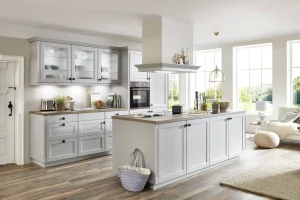

Wooden Hotel Furniture Turkey
Wooden Hotel Furniture Turkey: The Definitive Technical Engineering, Sourcing, and Procurement Guide for Global Hospitality Developments
In the highly competitive landscape of global hospitality development, the choice of raw materials, manufacturing methods, and procurement pathways determines a hotel property’s capital expenditure efficiency, operational longevity, and brand value. Within this sector, specifying Wooden Hotel Furniture Turkey has transitioned from an emerging alternative into an industry-wide standard for tier-one project delivery. Sourcing contract-engineered wooden furniture and architectural millwork from Turkey allows global hoteliers, procurement consultants, and commercial interior architects to access a robust manufacturing infrastructure. This hub combines deep woodworking traditions with advanced multi-axis CNC technology, computerized kiln systems, and sustainable, vertically integrated supply chains.
As international hospitality brands favor biophilic designs, premium residential-feeling guestrooms, and clear carbon reduction goals, the technical engineering behind wooden contract furniture has become highly specialized. This comprehensive, expert-level guide delivers the technical data arrays, material science comparisons, joinery calculations, and cross-border procurement frameworks required to successfully specify, engineer, and import high-performance Wooden Hotel Furniture Turkey installations for five-star luxury resorts, heritage boutique properties, and high-volume commercial business hotels worldwide.
1. The Strategic Structural Advantages of Sourcing Wooden Hotel Furniture from Turkey
Commercial hospitality spaces subject furniture to intense physical and environmental stresses that do not exist in residential properties. Over a standard seven-year guestroom renovation cycle, components like a bed base, wardrobe wardrobe, writing desk, or lobby table will experience frequent impacts from heavy luggage, localized humidity changes from adjacent bathrooms, and contact with strong commercial cleaning chemicals. Choosing Wooden Hotel Furniture Turkey programs equips project teams with distinct industrial and material advantages specifically structured to handle these operational challenges.
Sovereign Forestry Reserves and Deep Vertical Integration
Unlike manufacturing hubs that function primarily as assembly facilities for imported composite wood sheets or raw timber logs shipped across vast maritime routes, Turkey’s wood production sector is built upon deep domestic resource integration.
- Massive Sustainable Resources: The country contains expansive, sustainably managed forestry networks. These networks produce high-density hardwoods such as European Hornbeam (Carpinus betulus), European Beech (Fagus sylvatica), Anatolian Walnut (Juglans regia), and Sessile Oak (Quercus petraea).
- Consolidated Industrial Ecosystems: Specialized manufacturing zones locate logging operations, industrial sawmills, automated vacuum kiln stations, multi-axis CNC shaping centers, and handcrafted carving guilds within highly compressed regional perimeters. This spatial density eliminates cross-border logistics friction, lowers environmental impact, and ensures complete traceability across every single batch of timber from harvest to finished component.
Logistical Compression and Risk Mitigation
For multi-million dollar hospitality rollouts, extended shipping timelines present a severe financial vulnerability. Every extra week an FF&E (Furniture, Fixtures, and Equipment) shipment spends at sea directly translates to lost RevPAR (Revenue per Available Room) and compounds construction loan financing costs.
- Geographic Trade Advantages: Turkey’s physical positioning at the crossroads of Europe, Asia, and Africa provides exceptional shipping agility.
- Rapid Intermodal Logistics: Overland trucking networks transport highly sensitive, custom-crated solid wood furniture directly from Turkish manufacturing plants to mainland European destinations within 5 to 10 days. Direct maritime cargo routes from major ports like Ambarlı (İstanbul), İzmir, and Mersin reach North American and Middle Eastern ports within 14 to 26 days. This offers an incredible time advantage over East Asian alternatives, which frequently face 45-to-60-day ocean freight delays and unpredictable port disruptions.
- Tariff Protections: The established Customs Union agreement between Turkey and the European Union eliminates import tariffs on industrial and manufactured goods. This significantly reduces customs paperwork, prevents border bottlenecks, and lowers landed costs for international developers.
2. Key Manufacturing Clusters for Wooden Hospitality Furniture in Turkey
To successfully navigate a Wooden Hotel Furniture Turkey procurement campaign, project management teams must target their specific engineering and design requirements to the appropriate regional industrial clusters, as each hub features distinct material specializations and technical traditions.
+---------------------------------------------------------------------------------+

|               TURKISH WOODEN FURNITURE INDUSTRIAL CLUSTERS                      |
+---------------------------------------------------------------------------------+

| BURSA (SİTELER) --> Automated Multi-Axis CNC Lines, Mass-Scale Modular Cases    |
| ANKARA (SİTELER)--> Heritage Woodworking, Handcarved Detailing, Fine Joinery     |
| İSTANBUL        --> High-Concept Contemporary Luxury, Mixed-Material Engineering|
| KAYSERİ         --> Industrial Scale Seating Frames, High Volume Output        |
+---------------------------------------------------------------------------------+
Bursa (İnegöl): The Capital for Automated Mass-Production and Modular Precision
İnegöl is an industrial contract manufacturing powerhouse optimized for rapid production cycles, automated consistency, and massive volume processing.
- Primary Capabilities: Processing high volumes of engineered wood, medium-density fiberboard (MDF), and high-density particleboard through automated multi-axis double-end tenoners and computer-controlled edge-banding lines.
- Technology Profile: Optimized for high-volume 3-star and 4-star business hotel rollouts, select-service properties, and large-scale commercial developments where rapid delivery and precise price-point optimization are required.
Ankara (Siteler): The Hub for Fine Joinery and Master Craftsmanship
Siteler represents the historical and artisanal heart of Turkish woodworking craftsmanship.
- Primary Capabilities: Master artisans excel in traditional wood manipulation, complex steam-bending of hardwoods, intricate hand-carvings, genuine marquetry inlays, gold-leaf gilding, and traditional joinery interfaces.
- Project Profile: Perfectly suited for historic luxury hotel restorations, palace-tier presidential suites, five-star heritage hotels, and high-end boutique properties requiring absolute custom timber detailing.
İstanbul: The Center for High-Concept Contemporary Mixed-Material Luxury
İstanbul houses advanced technical engineering offices and highly sophisticated custom factories that specialize in turning complex architectural submittals into compliant products.
- Primary Capabilities: Seamlessly integrating solid hardwoods with structural metals, PVD titanium nitride coatings, custom cast glass, and full-grain leathers.
- Engineering Infrastructure: İstanbul factories maintain massive internal engineering divisions that convert conceptual architectural sketches into millimeter-precise, machine-ready production blueprints using advanced AutoCAD, SolidWorks, and BIM software.
Kayseri: High-Volume Industrial Sub-Frames and Framing Elements
Kayseri contains some of the largest automated industrial furniture plants in Europe, focusing on high-volume production of core framing elements.
- Primary Capabilities: Fabricating heavy-duty internal solid wood frames for soft seating, mass-producing structural bed leg assemblies, and executing large-volume contract orders.
- Project Profile: Sourced primarily for large select-service and business hotel chains where internal solid wood structural components must maintain absolute structural durability and strict international safety codes at a significant scale.
3. Core Material Science and Substrate Engineering for Wooden Furniture
The structural integrity and long-term lifespan of wooden hospitality contract furniture depend directly on the engineering profiles of both the visible solid components and the hidden internal substrates. Leading manufacturers of Wooden Hotel Furniture Turkey configure material layers based on strict technical performance metrics.
+---------------------------------------------------------------------------------------+

|                 WOODEN SUBSTRATE PERFORMANCE AND TECHNICAL SPECIFICATION              |
+---------------------------------------------------------------------------------------+

| Core Material Type     | Density (kg/m³) | Internal Bond (N/mm²) | Moisture Swelling Rate|
+------------------------+-----------------+-----------------------+-----------------------+

| Moisture-Resistant MDF | 760 - 820       | >= 0.65               | < 8% (24-hour soak)   |
| Multi-Ply Birch Marine | 650 - 700       | >= 0.55               | < 4% (Phenolic Resin) |
| Tubular Particleboard  | 450 - 520       | >= 0.35               | < 12% (Standard core) |
| High-Density Fiberboard| 850 - 950       | >= 0.80               | < 5% (Extreme load)   |
+------------------------+-----------------+-----------------------+-----------------------+
Moisture-Resistant High-Density Fiberboard (MR MDF)
Standard residential-grade fiberboard will swell, warp, and undergo structural failure when exposed to the high humidity typical of guestrooms located near non-separated bathrooms. Sourcing premium Wooden Hotel Furniture Turkey ensures the use of MR MDF cores:
- Structural Specifications: Panels utilize specific hydrophobic resin binders that maintain an internal bond strength exceeding \(0.65\text{ N/mm}^2\).
- Performance Testing: When subjected to a continuous 24-hour water immersion test, high-performance MR MDF cores demonstrate a thickness swelling rate of less than 8%, preventing edge delamination along critical joints.
Multi-Layer Structural Wood Plywood
For high-load areas—such as luggage benches, wall-mounted floating desk assemblies, and television panel supports—relying on fiberboard can create long-term structural risks.
- Material Selection: Turkish contract factories utilize multi-layered birch or okoume plywood panels cross-laminated with phenolic or urea-formaldehyde weather-resistant adhesives.
- Screw-Holding Strength: Plywood cores provide excellent face and edge screw-holding capacities, ensuring heavy commercial wall anchors and structural hinges remain firmly attached over thousands of operating cycles.
Functional Edge Banding Protocols: Preventing Core Exposure
The edges of wardrobes, nightstands, and desk surfaces are highly susceptible to physical impacts from luggage and housekeeping carts.
- Laser-Fused ABS Edge Banding: Advanced Turkish manufacturing plants utilize laser or hot-air edge-banding systems. These machines use a concentrated energy beam to melt a co-extruded functional layer on the back of an ABS (Acrylonitrile Butadiene Styrene) edge band, fusing it directly to the core substrate.
- Eliminating the Glue Line: This technique eliminates the traditional EVA/PUR hot-melt glue line. The resulting seamless joint prevents moisture from cleaning mops from penetrating the core, and stops bacteria or dirt from accumulating in visible seams.
4. Solid Wood Species Profiles and Advanced Mechanical Engineering
When designing a Wooden Hotel Furniture Turkey program, selecting the right wood species is essential for matching the performance needs of different spatial zones. Turkish manufacturers harvest and process premium hardwoods according to precise material engineering data.
European Hornbeam (Carpinus betulus) – The Structural Core Strength
Hornbeam is widely used across Turkey for hidden, high-stress structural frame construction within public area seating and heavy bedding arrays.
- Mechanical Attributes: Featuring an exceptional density range up to \(820\text{ kg/m}^3\) and an ultra-high Janka hardness rating, Hornbeam delivers unparalleled screw-holding capacity and resistance to splitting.
- Application: Ideal for internal sofa chassis, structural corner blocking, and heavy luggage rack framing where maximum physical impact resistance is mandatory.
Sessile Anatolian Oak (Quercus petraea) – High-Impact Surface Performance
Anatolian Oak is a premier choice for highly exposed, high-traffic hospitality surfaces.
- Mechanical Attributes: Its dense, ring-porous cell structure provides excellent resistance to deep scratches and compression failures. High natural tannin levels within the wood fibers offer innate resistance to fungal attacks and decay.
- Application: Specified for high-use restaurant tabletops, lobby reception surfaces, public corridor wall paneling, and guestroom entry door frames.
European Beech (Fagus sylvatica) – Flexural Elasticity for Seating
Beech is a highly versatile hardwood used extensively across Turkey for curved furniture designs.
- Mechanical Attributes: Beech features uniform pore distribution and exceptional steam-bending capabilities. When properly conditioned under pressurized steam, it can be bent into tight, elegant curves without fracturing its structural fibers.
- Application: Widely utilized for premium restaurant chairs, bentwood stools, curved armchair arms, and organic lounge frames.
Anatolian Walnut (Juglans regia) – Elite Architectural Luxury
Anatolian Walnut is universally regarded as an elite luxury material due to its rich, deep color grain variations and excellent structural stability.
- Mechanical Attributes: While slightly lower in density than Hornbeam or Oak, Walnut displays a very low shrinkage coefficient, making it highly resistant to warping or checking across variable indoor climates.
- Application: Reserved for luxury suite desks, premium headboard details, presidential suite conference tables, and high-end executive casegoods.
Advanced Timber Conditioning: Vacuum Kiln Control
Raw solid wood is a living, hygroscopic material that naturally absorbs and releases moisture. To prevent finished furniture from warping or checking when shipped across different global climate zones, Turkish factories implement strict vacuum kiln procedures:
- Moisture Equilibrium Tracking: Raw lumber lots are stacked inside computerized vacuum or convection kilns.
- Thermal Stabilization Curve: Sensors carefully track the timber core, slowly lowering internal moisture content from over 35% down to a uniform equilibrium between 8% and 11% depending on the destination market.
- Internal Stress Elimination: This slow, controlled drying process releases internal cellular tensions within the hardwood blocks. This ensures the wood fibers remain perfectly stable, avoiding checking, splitting, or geometric twisting when exposed to the arid air-conditioned environments of modern high-rise hotels.
5. Joinery Engineering and Mechanical Integrity for Commercial Spaces
Residential furniture frequently relies on basic pocket holes, staples, or simple dowels. True contract-grade Wooden Hotel Furniture Turkey features heavy-duty mechanical joinery interfaces designed to withstand continuous torque.
+---------------------------------------------------------------------------------+

|                     COMMERCIAL JOINERY APERTURE PROFILE                         |
+---------------------------------------------------------------------------------+

|   [SOLID HARDWOOD APRON FRAME]                                                  |
|         +-------------------------------------------------------------+         |
|         |   MORTISE RECEIVER INTERFACE (CNC Milled To 0.1mm)          |         |
|         |   +-----------------------------------------------------+   |         |
|         |   |  TENON PROTRUSION INSERTION                         |   |         |
|         |   |  (Cross-Pinned with Hardwood Dowels & D3 PVA Glue)  |   |         |
|         |   +-----------------------------------------------------+   |         |
|         +-------------------------------------------------------------+         |
+---------------------------------------------------------------------------------+
Mortise-and-Tenon Architecture
Chair legs, table aprons, and bed corners are connected using deep mortise-and-tenon configurations cut via automated multi-axis CNC machines to a clearance tolerance of less than \(0.1\text{ mm}\).
- Chemical Bonding: The joints are coated with industrial-grade D3 or D4 water-resistant cross-linked PVA adhesives.
- Mechanical Locking: Once inserted, the joint is cross-pinned with hardwood dowels driven through the assembly under pressure, ensuring the connection remains rock-solid even if the glue line experiences shear stress over time.
Corner-Block Reinforcement Protocols
At points of high torsional stress, such as where legs join dining chair frames, assemblies are reinforced using thick solid wood corner blocks.
- Assembly Method: These triangular reinforcement blocks are coated in industrial glue, positioned tightly into the frame corner, and secured with twin heavy-duty zinc-plated structural screws. This structural design prevents the frame from loosening when guests lean back or shift weight unevenly.
Wood Expansion Engineering
Because solid timber constantly expands and contracts across its grain direction in response to humidity shifts, large wood surfaces (such as communal tabletops or wardrobe end panels) are never rigidly anchored down to a framework.
- Sliding Mechanical Fasteners: Turkish engineers mount tabletops using specialized metal Z-clips, sliding dovetail cleats, or slotted expansion buttons. This allow the wood panel to slide subtly across its width while remaining securely tied to the structural support base, preventing checking, splitting, or warping over time.
6. Industrial Surface Finishes and Chemical Resistance Engineering
The exterior layer of Wooden Hotel Furniture Turkey represents the primary defensive shield against physical friction, moisture ingress, and harsh cleaning agents used by hotel housekeeping teams. Finishes must be technically engineered to resist hot beverage stains, high-proof alcohol spills, cosmetic oils, and abrasive impacts.
Two-Pack Acrylic Polyurethane Finishing Systems
For premium open-grain and high-gloss natural wood veneers, Turkish finishers apply multi-stage, two-pack acrylic polyurethane coatings.
- UV Stability: These lacquer formulations are enhanced with specialized aliphatic hardeners that create total yellowing resistance when exposed to intense, direct sunlight through guestroom windows.
- Surface Hardness Performance: Surfaces undergo testing to achieve a high pencil hardness rating up to 3H. They resist visible surface damage from continuous exposure to 96% ethanol, hot coffee, red wine, and strong commercial disinfectants for up to 16 hours.
Ultraviolet (UV) Cured Coating Lines
For flat panel configurations processed in high volumes, automated Turkish factories utilize specialized UV-curable acrylic roller systems.
- Instant Polymerization: Passing through intensive UV radiation tunnels, the chemical coating cures instantly, forming a highly dense, cross-linked polymer shield.
- Performance Profile: This hard finish provides exceptional scratch, wear, and abrasion resistance, making it highly effective for heavy-use hotel desk surfaces and luggage rack backing zones.
Environmental Low-VOC and Food-Safe Compliance
High-end Wooden Hotel Furniture Turkey exporters modify their finishing lines to conform to strict international environmental guidelines.
- Indoor Air Quality (IAQ) Focus: Coating products carry formal certifications confirming compliance with European low-VOC (Volatile Organic Compound) standards. This limits toxic offgassing and chemical out-of-the-box smells, which helps preserve indoor air quality within enclosed hotel guestrooms.
- Food Safety Compliance: Oils and waxes used for restaurant tabletops are certified food-safe according to international health standards (such as EN 71-3 criteria), ensuring that direct food contact presents zero chemical migration risks.
7. Spatial Applications and Item-by-Item Wooden Engineering
A comprehensive hotel development project spans several distinct public and private zones. Experienced Wooden Hotel Furniture Turkey manufacturers organize production along these spatial requirements, tailoring the structural engineering of each piece to its specific zone.
+---------------------------------------------------------------------------------------+

|                            HOTEL SPATIAL DECORATION ZONES                             |
+---------------------------------------------------------------------------------------+

|  [Zone 1: Guestrooms & Keys]  --> Modular Bed Bases, Wardrobes, Minibar Venting       |
|  [Zone 2: Lobby Lounge]       --> Heavy Plinth Sofas, Acoustic Paneling, Partitions   |
|  [Zone 3: Food & Beverage]    --> Stretcher Dining Chairs, Weighted Table Bases       |
|  [Zone 4: Outdoor Terraces]   --> Grade-A Teak wood, Marine Alloys, Quick Dry Foam    |
+---------------------------------------------------------------------------------------+
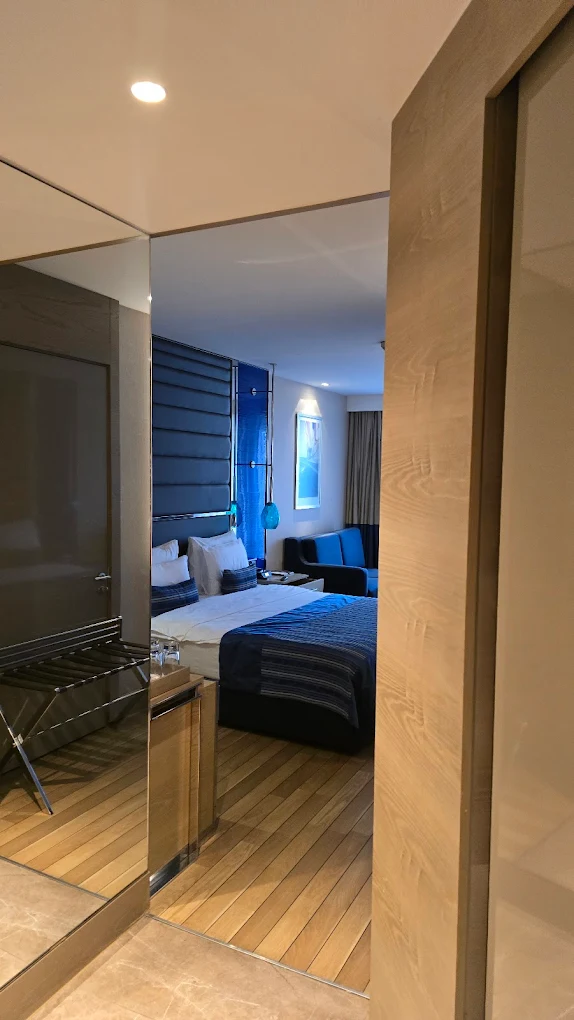
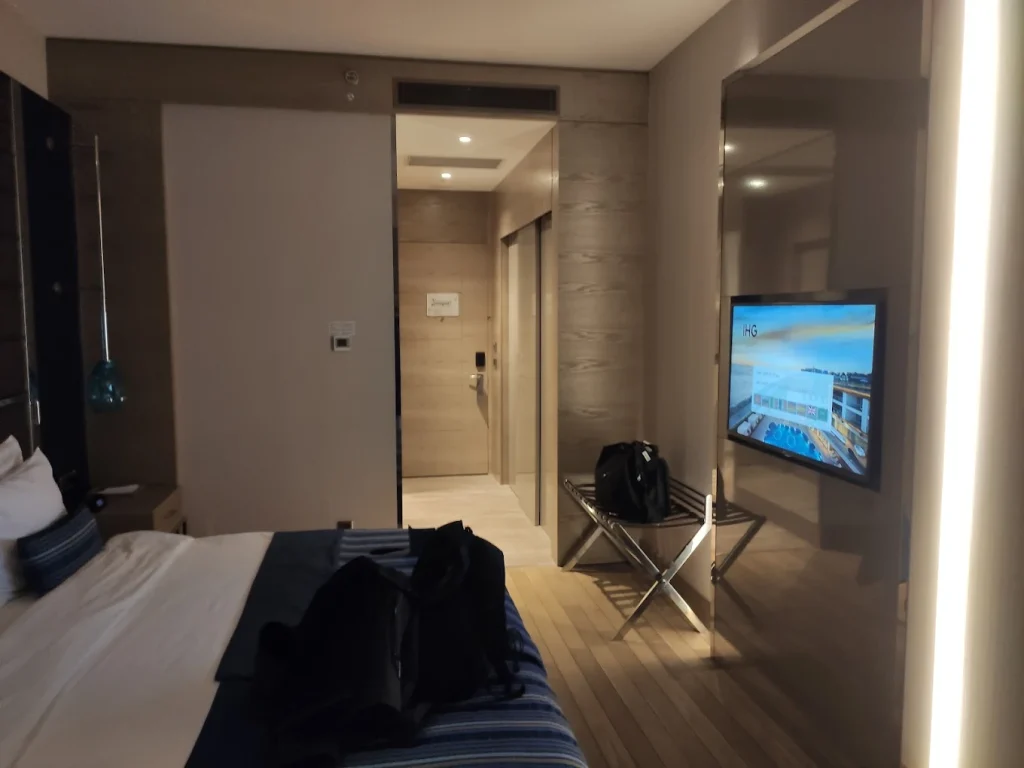
Zone 1: Guestrooms and Suites (Casegoods & Bedding)
The guestroom require a warm, welcoming residential atmosphere balanced with industrial-grade durability.
- Solid Wood Bed Sommiers: Bed platforms are framed with kiln-dried solid beech or hornbeam perimeter walls to support heavy hospitality mattresses without flexing or creaking.
- Wardrobes and Integrated Closets: Incorporate solid wood frames fitted with heavy-duty institutional hardware, including soft-close drawer runners rated for 100,000 cycles and 175-degree opening hinges to prevent door damage from over-extension.
- Minibar Ventilation Systems: Enclosing a minibar refrigerator without proper airflow traps hot air, lowering cooling efficiency and causing early compressor failure. Turkish joinery designs address this with integrated ventilation pathways:
+---------------------------------------------------------------------------------+

|                     MINIBAR AIRFLOW VENTILATION PATHWAY                         |
+---------------------------------------------------------------------------------+

|              [BACK GUESTROOM WALL]                                              |
|                         ^                                                       |
|                         | Exhaust Hot Air rises through upper rear channel      |
|          +--------------+-------------+                                         |
|          |   [MINIBAR REFRIGERATOR]   |                                         |
|          |                            |                                         |
|          +--------------+-------------+                                         |
|                         ^                                                       |
|                         | Intake Cool Air draws in via plinth cutoff panel      |
|              [FRONT PLINTH GRILLE BASE]                                         |
+---------------------------------------------------------------------------------+
- Air Transfer Cutouts: Ventilation paths require a minimum cross-sectional open area of \(200\text{ cm}^2\) cut into the lower kickplate plinth and the upper rear panel of the cabinetry enclosure to ensure adequate continuous airflow.
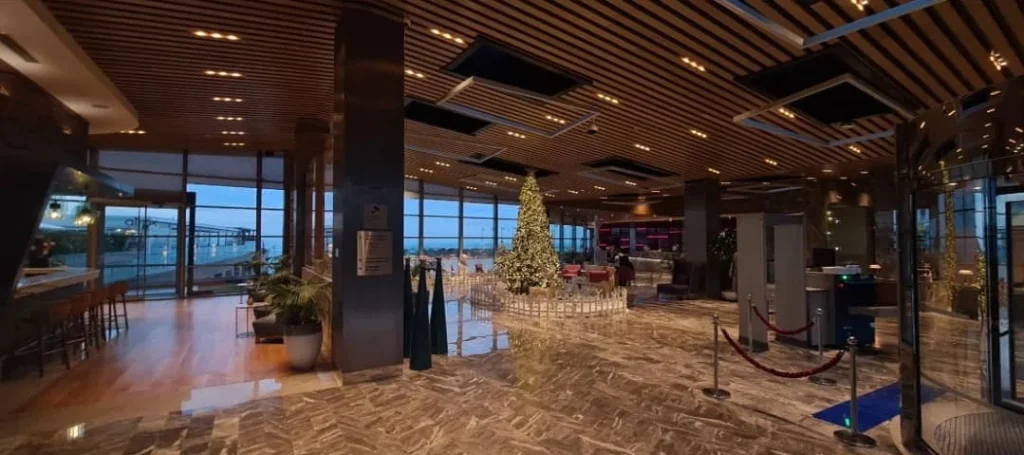
Zone 2: Public Spaces and Lobbies (High-Impact Zones)
Lobbies operate continuously, exposing furniture to heavy physical impacts from guests and rolling luggage.
- Communal Worktables: Built using thick natural solid oak or walnut slabs. These tables incorporate internal structural steel stabilization bars routed into the underside of the wood planks to prevent sagging over long spans.
- Reception Framing: Solid wood framing systems are combined with natural stone accents and protective kickplates made from PVD-coated stainless steel to protect lower edges from footwear and rolling suitcases.
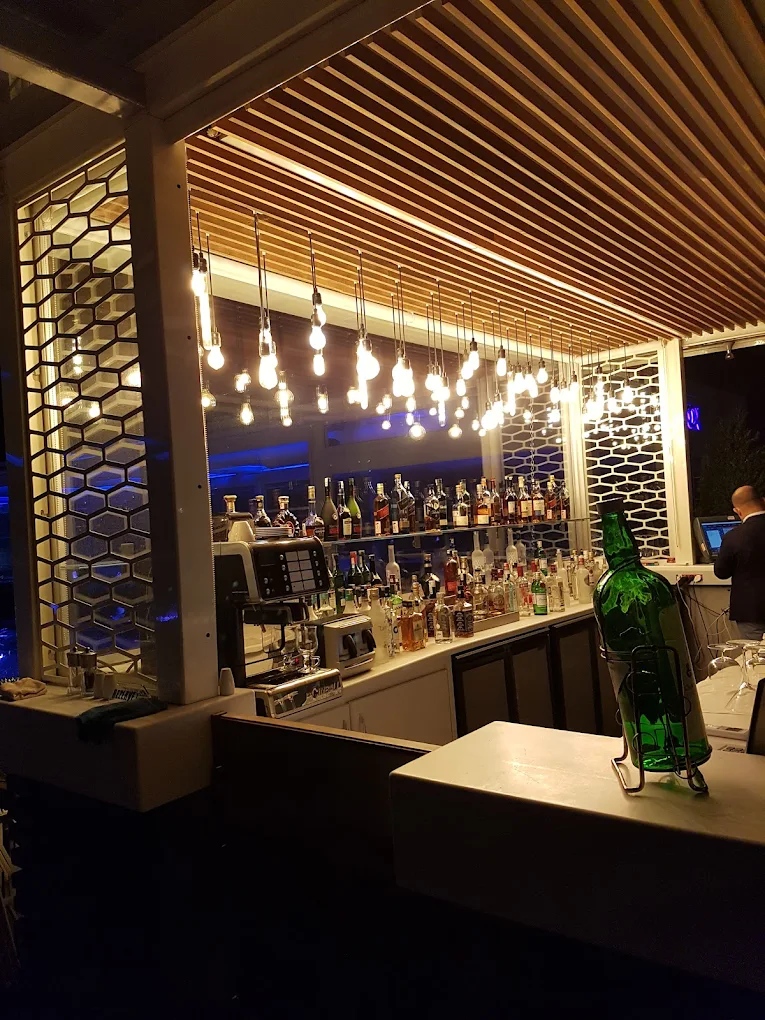
Zone 3: Food & Beverage Outlets (Restaurants, Cafés, Bars)
F&B furniture faces constant physical movement, sudden impacts, and variable weight loads.
- Dining Chairs: Must feature integrated structural H-stretchers or box stretchers between legs to withstand continuous torque stress. Weight capacities are tested to exceed \(150\text{ kg}\) per seat.
- Table Pedestals: Solid wood pedestal leg structures are anchored internally with heavy-duty threaded steel rods that screw directly into cast-iron or heavy steel stabilizing base plates, providing exceptional stability.
Zone 4: Outdoor and Wellness Areas (Poolside Terraces, Spas)
Outdoor elements must combat intense UV exposure, oxidation, moisture, and high salinity.
- Grade-A Sourcing: Utilizing genuine, sustainably sourced plantation teak wood (Tectona grandis) with an optimal natural oil content.
- Pre-Wash Treatments: All joint fasteners are fabricated from marine-grade Grade 316 stainless steel or solid brass to prevent corrosion. The timber surfaces are left untreated to age into a beautiful silver-grey patina, or coated with specialized breathable teak oils.
8. The Turn-Key Procurement Process: Managing Sourcing from Turkey
Successfully executing a comprehensive Wooden Hotel Furniture Turkey contract requires following a structured project management workflow to ensure accurate design implementation and minimize financial risk.
+----------------------------------------------------------------------------------------+

|                          CONTRACT PROCUREMENT TIMELINE                                 |
+----------------------------------------------------------------------------------------+

| Phase 1: Bill of Quantities (BoQ) Review & Value Engineering Technical Audit           |
|    |                                                                                   |
|    v                                                                                   |
| Phase 2: Millimeter-Accurate Shop Drawings, Structural Joinery Plans & Material Boards |
|    |                                                                                   |
|    v                                                                                   |
| Phase 3: The Mock-up Room Protocol (Full Manufacturing and Inspection of Prototypes)  |
|    |                                                                                   |
|    v                                                                                   |
| Phase 4: Full Mass Production and Scheduled In-Line Independent Quality Control Audits |
|    |                                                                                   |
|    v                                                                                   |
| Phase 5: Heavy-Duty Industrial Packaging, Edge Bumpers & Heat-Treated Crating          |
|    |                                                                                   |
|    v                                                                                   |
| Phase 6: Export Customs Clearance, Intermodal Transit Logistics & On-Site Installation |
+----------------------------------------------------------------------------------------+
Phase 1: Bill of Quantities (BoQ) Review and Value Engineering
The procurement process begins with submitting the interior designer’s schematic plans, fabric schedules, and precise BoQ matrices to the technical team at the Turkish factory.
- Engineering Review: The factory’s engineering team reviews the designs to catch potential manufacturing or durability issues, such as insecure wall anchor points or unsupported overhangs on stone desks.
- Value Engineering (VE): Sourcing specialists recommend material adjustments to optimize the project budget. For example, they might replace a costly imported solid wood element within an internal support frame with locally sourced, kiln-dried hornbeam. They can also use thick, natural book-matched wood veneers over a stable high-density fiberboard core instead of solid wood panels. This maintains the premium appearance while improving dimensional stability and lowering overall costs.
Phase 2: Detailed Shop Drawings and Material Boards
Before beginning fabrication, the manufacturer’s technical office translates conceptual design layouts into precise production shop drawings.
- Technical Detail: These drawings clearly label internal joints, dowel placements, metal wall-mount brackets, and the hardware brands used.
- Physical Submittals: The factory compiles comprehensive sample boards containing actual finish swatches (wood veneers with varied sheen levels, powder-coated metal chips, stone slices, and fabric cuttings) for formal sign-off from the hotel owner and interior design team.
Phase 3: The Mock-up Room (Prototype Protocol)
For mid- to large-scale hotel projects, producing a complete prototype room is a standard, essential risk-mitigation step.
- Execution: The factory builds an exact replica of every single furniture item specified for the guestroom layout.
- Evaluation: The developer, project manager, and lead architect inspect the mock-up room, either at the factory showroom in Turkey or shipped directly to the hotel construction site. This phase provides a hands-on opportunity to verify ergonomics, double-check finish compatibility, test hardware performance, and evaluate packaging strength before committing to full mass production.
Phase 4: Mass Production and Quality Control Audits
Once the prototype receives formal approval, full-scale mass production begins. Professional procurement teams often work with third-party testing and inspection firms (such as SGS, Intertek, or Bureau Veritas) to run regular quality audits throughout production:
- In-Line Material Audits: Checks substrate thickness consistency, verifies that wood lots are kiln-dried to proper moisture levels, and monitors CNC machining accuracy.
- Structural Assembly Checks: Inspects frame rigidity, dowel alignment, and the installation of corner blocks before upholstery or surface finishing.
- Final Pre-Shipment Audits: Evaluates finish thickness and uniformity, hardware functionality, stitching quality, and overall dimensions against the approved shop drawings.
Phase 5: Heavy-Duty Industrial Packaging and Export Crating
International shipping can expose furniture to significant physical vibration and moisture. High-performing suppliers of Wooden Hotel Furniture Turkey employ robust packaging systems:
- Edge and Corner Buffers: High-density polyethylene (HDPE) foam profiles wrap all vulnerable corners to absorb impacts during transit.
- Surface Interlining: Delicate lacquered or polished wood surfaces are covered with non-abrasive scratch-resistant foam sheets to prevent friction damage.
- Corrugated Boxing: Double- or triple-wall corrugated cardboard cartons are sealed tightly against humidity.
- Heavy-Duty Crating: Fragile stone vanity tops, glass mirrors, and large headboard sections are packed into custom-built, ISPM-15 certified heat-treated wooden crates to protect them during intermodal shipping and mechanical offloading at the job site.
9. Certifications, Compliance, and International Environmental Standards
To maintain international hospitality industry standards, Wooden Hotel Furniture Turkey suppliers carry various certifications proving global compliance.
Environmental and Sustainability Standards
- FSC Certification (Forest Stewardship Council): Guarantees that the solid woods, veneers, and wood-based substrates originate from responsibly managed, legally logged forests. This tracker is increasingly required by major international hotel brands to fulfill internal corporate ESG (Environmental, Social, and Governance) corporate targets.
- E1 and E0 Formaldehyde Emission Standards: Composite wood boards utilized by Turkish manufacturers comply with low-emission European standards. This limits formaldehyde outgassing to maintain healthy indoor air quality (IAQ) within sealed hotel guestrooms.
Quality Management Matrix
- ISO 9001: Validates that the factory operates a consistent, traceably documented quality management system from raw material intake to final packaging.
- ISO 14001: Demonstrates compliance with international environmental management protocols during manufacturing.
- ISO 45001: Confirms safe occupational health and safety systems exist on the production floor.
10. Contract Management, Payment Structures, and Risk Mitigation
International furniture procurement requires clear legal frameworks and structured financial milestones to safeguard investments and ensure on-time project delivery.
Payment Milestone Structures
Sourcing contract furniture and decoration programs from Turkey typically follows an incremental, milestone-based payment model:
- 30% to 40% Advance Payment: Initiates shop drawing production, engineering work, and raw material allocation (such as purchasing lumber lots or scheduling textile runs).
- 40% to 50% Progress Payments: Paid in installments tied to verifiable production stages (e.g., raw joinery assembly completion, post-finishing assembly).
- 10% Final Balance: Released upon presentation of clean Bills of Lading and a successful third-party pre-shipment quality inspection at the factory.
Legal Protections and Delivery Terms
- Incoterms Alignment: Contracts must clearly define shipping terms. FOB (Free on Board) shifts shipping costs and insurance risks to the buyer once the goods pass the ship’s rail at a Turkish port. DDP (Delivered Duty Paid) requires the manufacturer to manage all ocean/land transport, import custom clearances, local duties, and final delivery directly to the hotel job site.
- Liquidated Damages: Contracts should include clauses that apply a pre-agreed financial penalty per day if production deadlines are missed. This protects the developer from costly delays that could impact the hotel’s grand opening.
- Warranty Retentions: Holding back 5% of the total contract value for 6 to 12 months after installation provides a helpful financial buffer to cover any structural issues or minor defects that appear during the hotel’s initial high-traffic operations.
11. Strategic Sourcing Comparison: Turkey vs. Alternative Global Manufacturing Hubs
When deciding where to manufacture hospitality decoration and FF&E packages, procurement managers typically compare Turkey against alternative hubs such as China or Italy.
| Sourcing Performance Metric | Turkey | China | Italy |
|---|---|---|---|
| Bespoke Design Flexibility | Exceptional | Moderate (High Volume Focus) | World-Class Artisanal |
| Manufacturing Lead Time | 45 – 60 Days | 60 – 90 Days | 90 – 120 Days |
| Logistics Transit to EU/ME | 3 – 14 Days (Very Short) | 35 – 45 Days (Long Ocean Route) | 2 – 5 Days (Immediate) |
| Cost-to-Quality Optimization | Excellent (High Value) | Very Low (Mass Commodity) | Premium/Luxury Costs |
| Raw Material Autonomy | High (Vast Domestic Supply) | Low (Relies on Timber Imports) | Brief European Network |
Turkey vs. China
- Lead Time Reductions: Sourcing from East Asian ports requires long maritime transit windows (typically 35 to 45 days). Turkey’s intermodal shipping alternatives reduce transit times to 3–14 days. This speed helps compress total construction timelines and lowers interest expenses on project financing.
- MOQ Adaptation: Chinese mega-factories are highly optimized for high-volume commodity production and often require high Minimum Order Quantities (MOQs) per individual SKU. Turkish contract suppliers offer greater production flexibility, allowing them to adjust manufacturing lines for custom, low-volume runs for boutique hotels or upscale luxury resort properties without requiring excessive volume commitments.
- Raw Material Security: While China imports a significant percentage of its timber from North America and Europe, Turkey utilizes its own extensive domestic wood reserves and raw material networks, helping protect buyers from global trade shocks.
Turkey vs. Italy
- Production Cost Efficiency: Italy remains a premier hub for luxury design innovation, but high labor costs and steep operational overhead result in premium per-unit pricing. Turkey provides comparable multi-axis CNC machinery, identical European-made functional hardware, and European-trained engineering expertise at a significantly lower production cost.
- Industrial Scale: Italy’s luxury sector is largely composed of smaller, specialized artisanal workshops. Turkey’s large furniture parks successfully combine artisanal attention to detail with large-scale industrial capacity, enabling them to supply massive decoration packages smoothly under one contract.
12. Future-Proofing Hospitality Installations: Sustainability and Design Trends
As international hospitality brands prioritize carbon footprint reduction and integrate smart room automation, turn-key suppliers of Wooden Hotel Furniture Turkey are adapting their engineering and material selection to meet these modern demands.
Design for Disassembly (DfD) and Circular Economy
To avoid replacing entire decorative pieces when a single component wears out, Turkish factories are engineering millwork and casegoods with smart modular connections:
- Replaceable Wear Components: Wall panels and desks are designed with easily detachable top sections, protective metal base trims, and modular fronts. This allows maintenance teams to swap out worn or scratched surfaces on-site without discarding the underlying structural framework.
- Refurbishment Readiness: Sourcing heavy, solid-wood internal frames allows hotels to easily reupholster or refinish the pieces during mid-cycle property updates, extending the furniture’s operational lifespan to 15–20 years.
Smart Finishes and Anti-Microbial Technologies
- Hygienic Surface Additives: Leading Turkish finishing lines offer silver-ion antimicrobial compounds integrated directly into their commercial polyurethane and acrylic topcoat lacquers. This treatment creates a permanent barrier that helps neutralize bacteria on high-touch surfaces like check-in counters and communal desks.
- Integrated Connectivity Channels: Modern furniture layouts incorporate hidden induction charging coils underneath wood veneer surfaces and low-profile power units blended seamlessly into fabric seams, keeping guestrooms and public spaces clean, connected, and clutter-free.
13. Conclusion and Strategic Procurement Summary
Sourcing a Wooden Hotel Furniture Turkey program provides international developers, procurement agencies, and hospitality architects with an elite configuration of design flexibility, technical durability, legal traceability, and cost optimization. By selecting factories within specialized regional manufacturing hubs, establishing clear technical core and surface metrics within tender documentation, and conducting structured third-party in-line quality control checks, buyers can reliably implement spaces that remain flawless over decades of high-volume commercial use.
To secure complete project reliability when sourcing contract wood furniture packages from Turkey, implement these three core procurement guidelines:
- Target Sourcing to Regional Ecosystem Strengths: Route avant-garde contemporary designs and technical mixed-material counters to the specialized engineering divisions in İstanbul, and direct high-capacity, fine-wood guestroom rollouts to the automated multi-axis woodworking lines in İnegöl or Siteler.
- Mandate Commercial-Grade Structural Core Metrics: Reject residential-grade composite substrates in favor of hydrophobic, moisture-resistant materials (MR MDF / Birch Plywood) and kiln-dried hornbeam frame chassis to protect assemblies against high humidity and physical impacts.
- Enforce Milestone-Based Quality Containment Contracts: Tie progressive manufacturing cash-flows directly to physical production milestones verified by accredited third-party auditing firms prior to export container packaging.
By utilizing Turkey’s sovereign raw material streams, advanced automated infrastructure, and deep heritage of artisanal manufacturing, global project managers can seamlessly transform high-concept architectural renderings into functional, durable, and commercially successful spaces.
To help narrow down the ideal Turkish engineering partners and technical strategies for your upcoming project, please provide a few key details:

Butik Otel Mobilyaları

Butik Otel Mobilyaları








Butik Otel Mobilyaları

Şunları da sevebilirsiniz
Lacquered Room Doors Production Turkey
Solid Wood Door Turkey